
Opal Experimentation University graduation stories: Class of July '26

Anubhav VermaAnubhav Verma
5. Aug. 2026

Meet the Class of July '26. 62 marketers spent five days building AI agents inside Opal Experimentation University. See what problems they solved with agents.

Most experimentation programs have the same quiet problem. The backlog lives in a spreadsheet. Prioritization is semi-educated guesswork. Two tests launch in the same week and interfere with each other, and nobody finds out until the results are already muddy. Then it's time to tell stakeholders what happened, and that's another few hours spent translating numbers into a story a non-tester will actually read. 

Opal U | AI Experimentation University is built around a different premise.  

Less theory, more: here's a build environment, here's five days, bring your actual backlog. No coding required. No pitch at the end. Just a brief and a deadline.

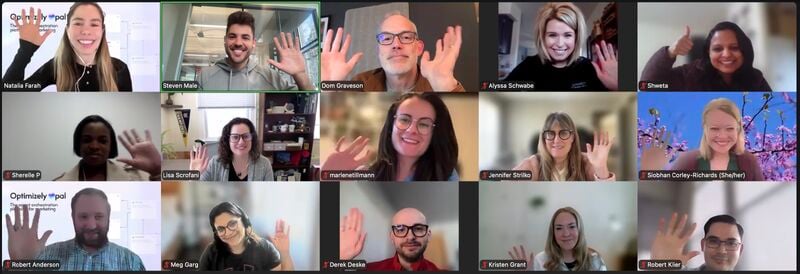
July 2026 cohort's 62 graduates came from companies including Mattel, OhioHealth, KHOV, Covista, Vivint, Paysafe, and Dexata, mostly in CRO, optimization, and experimentation roles, plus marketing managers, directors, and VPs. Between them, they built 91 agents during the week. Since graduating, that number has kept climbing — 178 agents and counting across the group's full account history.

The themes made the priorities obvious: conversion and CRO, analytics and reporting, competitor intelligence, content, SEO/AEO/GEO, A/B test workflow, brand voice. But underneath all of it, two things came up again and again. 

People wanted help ideating tests and communicating results.

Here are five of those agent-building stories.
1

The one that explains why you lost 

Andrea Ramcharan @ CRO Manager, Covista  

A results export tells you what happened. It rarely tells you why. Andrea built a Bayesian Test Screener that scans an Optimizely export, flags every test that clears a Bayesian significance band, and explains why the losing variant underperformed — not just which one won, but what went wrong with the one that didn't.

What it replaces: the follow-up meeting where someone asks "okay, but why did it lose?" and nobody has a good answer.

2

The one that ends the frequentist-vs-Bayesian argument 

Samrand Toufani @ Data Analyst, Zip Co 

Every testing team has some version of this fight: which statistical method do we trust for this result? 

Samrand's A/B Test Significance Analyst runs both a frequentist and a Bayesian check on the same test, then gives one straight ship-or-hold call.

What it replaces: two analysts, two methods, one unresolved Slack thread. 

3

The one that turns a request into a ticket engineering can work on 

Olivia Hollerbach @ Digital Testing Program Manager, PetSmart 

Someone requests a test. Weeks later, it's still not a ticket. Olivia's Test Request to Jira Epic Composer takes the intake and turns it straight into a review-ready Jira epic, with PetSmart's naming conventions and metrics already locked in.

What it replaces: the gap between "someone asked for a test" and "engineering has a ticket" — a gap that, left alone, tends to just sit there. 

4

The one Sarah wouldn't stop rebuilding  

Sarah Weber @ Marketing Insights & Strategy Manager, uShip 

Sarah built a Hypothesis Forge for CRO — an agent that reads a live page against a conversion goal and produces ten testable hypotheses. The first version worked. She rebuilt it anyway. Then, rebuilt it again. Three versions over the week, each one sharper than the last, until it gave her hypotheses she was able to put in front of a dev team. 

5

The one that answers the question every CRO consultant gets asked  

Thomas Adeleaux @ CRO Lead, Station10

"Which testing platform should we even use?"

Thomas built a Testing Tool Fit Comparator that weighs A/B testing platforms against a client's traffic, goals, and pricing — a question that used to mean a week of vendor calls, now answered in one run. 

Worth watching

Four participants independently built GEO/AEO auditors during the week, without seeing each other's work. Nobody assigned that brief. Possibly, it's just where a lot of experimentation and SEO thinking is heading right now.

Also, having a library of existing agents didn't stop people from building their own from scratch. The one template people did reach for repeatedly, a Competitor Webpage Analyzer, was cloned eight times, and almost all of it happened early in the week, before most people had browsed what already existed. Once they knew the library, they mostly built anyway.  

What they said, after:

"I really like the Opal product — it's improved so much even since December when I first used it."


"I liked being able to listen to others' challenges and the agents used to help with their workflow efficiencies."


"I learned so much in the course and loved the instructors."

The other 57 agent builders

Five stories can't cover sixty-two graduates from the July cohort. Between Mattel, PetSmart, Vivint, Paysafe, and the rest of the cohort, the builds ranged from Bayesian significance screeners to Jira epic composers to hypothesis generators to independent GEO/AEO auditors.  

That also brings Opal U | AI Experimentation University's total graduates to 115+ across cohorts and counting.

The problems across cohorts may not be the same, but the instinct is: Stop doing the repeatable part manually.

Apply to Opal U | AI Experimentation University now