Optimizely Opal ist kein gewöhnlicher Content-Assistent. Er basiert auf fünf Kernsäulen, die echte Marketing-Probleme lösen:
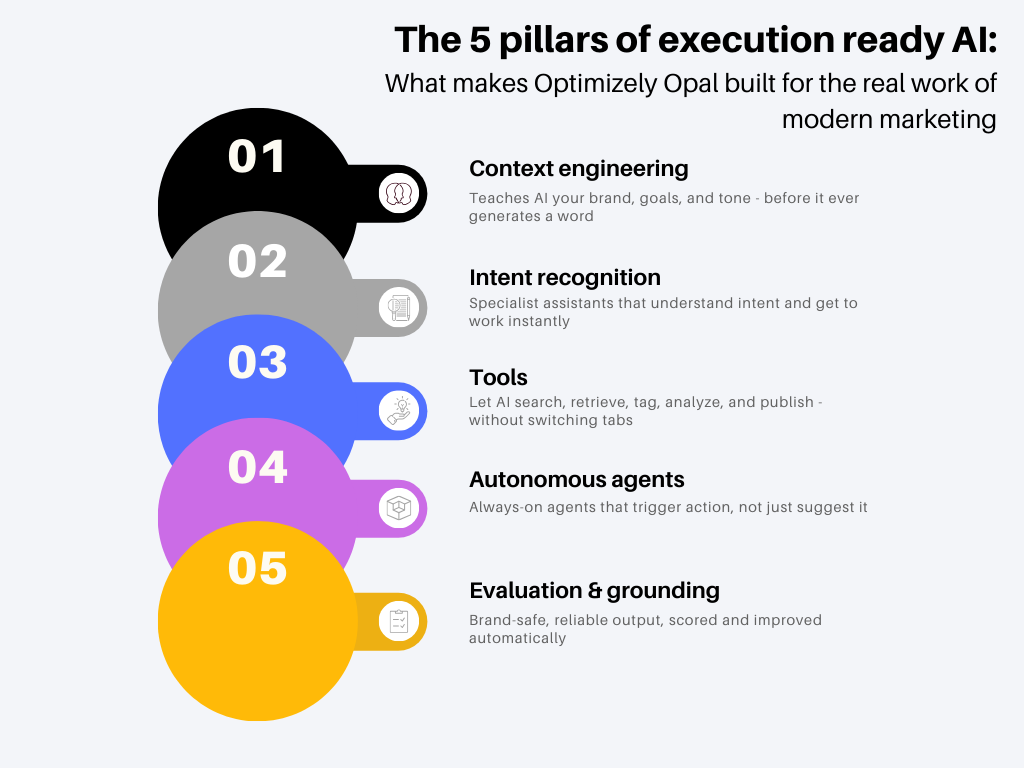
1. Kontextgestaltung: Die Grundlage der Umsetzung
Marketer agieren nicht isoliert – und KI sollte es auch nicht.
„Kontext ist in der KI entscheidend. Das wichtigste Attribut für gute KI-Ergebnisse ist nicht die schnelle Qualität, sondern wie durchdacht wir den Kontext gestalten.“ Imran Yousuf, VP Software Engineering, Optimizely
Optimizely Opal nutzt Context Engineering, um der KI das Gesamtbild zu vermitteln: Ihren Tonfall, Ihre Richtlinien, Ihre Kampagnenhistorie, Leistungsdaten, Zielgruppensegmente und Ziele. Anstatt sich auf eine Eingabeaufforderung zu verlassen, erstellt Opal ein strukturiertes Kontextpaket, bevor es etwas generiert.
Analogie: Die meisten KI-Tools geben dem Modell vor einer Prüfung nur eine kurze Zusammenfassung. Optimizely Opal gibt ihm das komplette Lehrbuch.
Dies stellt sicher, dass die Ergebnisse nicht nur qualitativ hochwertig, sondern auch markenkonform sind. Für Marketingverantwortliche bedeutet das: kein Überarbeiten von Entwürfen mehr, kein erneutes Erklären des Tonfalls und keine Unsicherheit mehr, ob die KI es „versteht“.
Und da Opal in Ihre Workflows integriert ist, hat es immer Zugriff auf Live-Systeme und aktuelle Ziele. Kein Kopieren und Einfügen mehr. Kein Kontextverlust. Kein erneutes Training.
💡„Niemand in Ihrem Marketingteam hat jeden Blogbeitrag, jede Produktbeschreibung und jedes Supportdokument gelesen. Opal aber schon.“ – Shafqat Islam
2. Absichtserkennung: Umsetzung im großen Stil
Optimizely Opal beinhaltet intelligente KI-Agenten – speziell entwickelte Assistenten, die Ihr Team bei der Erledigung wichtiger Aufgaben unterstützen.
Anstatt zwischen Tools zu wechseln oder Anweisungen erneut einzugeben, teilen Marketer Opal einfach mit, was sie benötigen: „Erstelle eine Kampagnenbeschreibung für unseren Opticon-Launch.“ „Fass die Ergebnisse dieses Experiments zusammen.“ „Erstellen Sie einen Contentplan für EMEA.“
Dies erkennt die Absicht und aktiviert die richtigen Agenten – sei es:
- Erstellen von Content-Briefings
- Planen von Personalisierungsexperimenten
- Überprüfen der Kampagnenleistung
- Empfehlen und Entwickeln von Tests
Keine Dropdown-Menüs. Keine neue Benutzeroberfläche zum Erlernen. Nur intelligente, reaktionsschnelle Unterstützung für Ihr Team.
Als CMO freue ich mich sehr über die Vorteile für mein Marketingteam: weniger Engpässe, schnellere Durchlaufzeiten und geringere Abhängigkeit von Insellösungen.
3. Tools: Lassen Sie KI die Arbeit erledigen
Die meisten KI-Systeme sprechen nur. Optimizely Opal handelt.
Optimizely Opal hat Zugriff auf eine Reihe von Tools – Funktionen, die es ermöglichen, in Ihren Systemen aktiv zu werden. Stellen Sie sich Tools als APIs für KI vor. Mit den Tools von Opal kann Opal:
- Ihr DAM nach Kampagnen-Assets durchsuchen
- Inhalte aus Ihrem DAM abrufen
- Erwähnungen von Mitbewerbern per Websuche prüfen
- Engagement vergangener Kampagnen analysieren
- Einträge in Ihren Kalender erstellen oder A/B-Tests starten
Und mithilfe von SDKs können Ihre Teams oder Partner Tools für Agenten entwickeln, die speziell auf Ihre Anwendungsfälle zugeschnitten sind.
Dadurch wird KI von einer Spielerei zu einer echten Teamerweiterung, die nicht nur darüber redet, sondern auch arbeitet.
4. Autonome Agenten: Kontinuierliche Ausführung
„Wir haben Opal so entwickelt, dass es sich wie ein Teammitglied verhält, das mit der Arbeit beginnt, bevor Sie sich einloggen, und sie beendet, nachdem Sie sich abgemeldet haben.“ Imran Yousuf, VP Engineering, Optimizely
Opal wartet nicht darauf, dass Ihr Team auf „Los“ drückt. Es kann autonom arbeiten und durch Ereignisse, Zeitpläne oder Schwellenwerte ausgelöst werden.
Zum Beispiel:
Diese Art von Hintergrundintelligenz bedeutet weniger verpasste Chancen, weniger manuelle Übergaben und mehr proaktive, KI-gestützte Ausführung.
5. Bewertung und Validierung: Qualität, der Sie vertrauen können
KI-Irrtümer sind real, und Markenschäden sind teuer.
Opal kann als interner Prüfer fungieren, Ergebnisse anhand der Markenrichtlinien bewerten, die faktische Richtigkeit mithilfe von Validierungsquellen überprüfen und die Ergebnisse zur Verbesserung in das System zurückspeisen.
Dies schließt den Kreislauf zwischen Generierung und Bewertung und stellt sicher, dass die Ergebnisse nicht nur schnell, sondern auch korrekt sind.
Für Führungskräfte bedeutet dies mehr Sicherheit und Kontrolle – ohne die Teams auszubremsen.
„KI ist selbstsicher – auch wenn sie falsch liegt. Deshalb sind Validierungs- und Bewertungsmechanismen unerlässlich für eine markensichere Ausführung.“ Imran Yousuf, VP Engineering, Optimizely