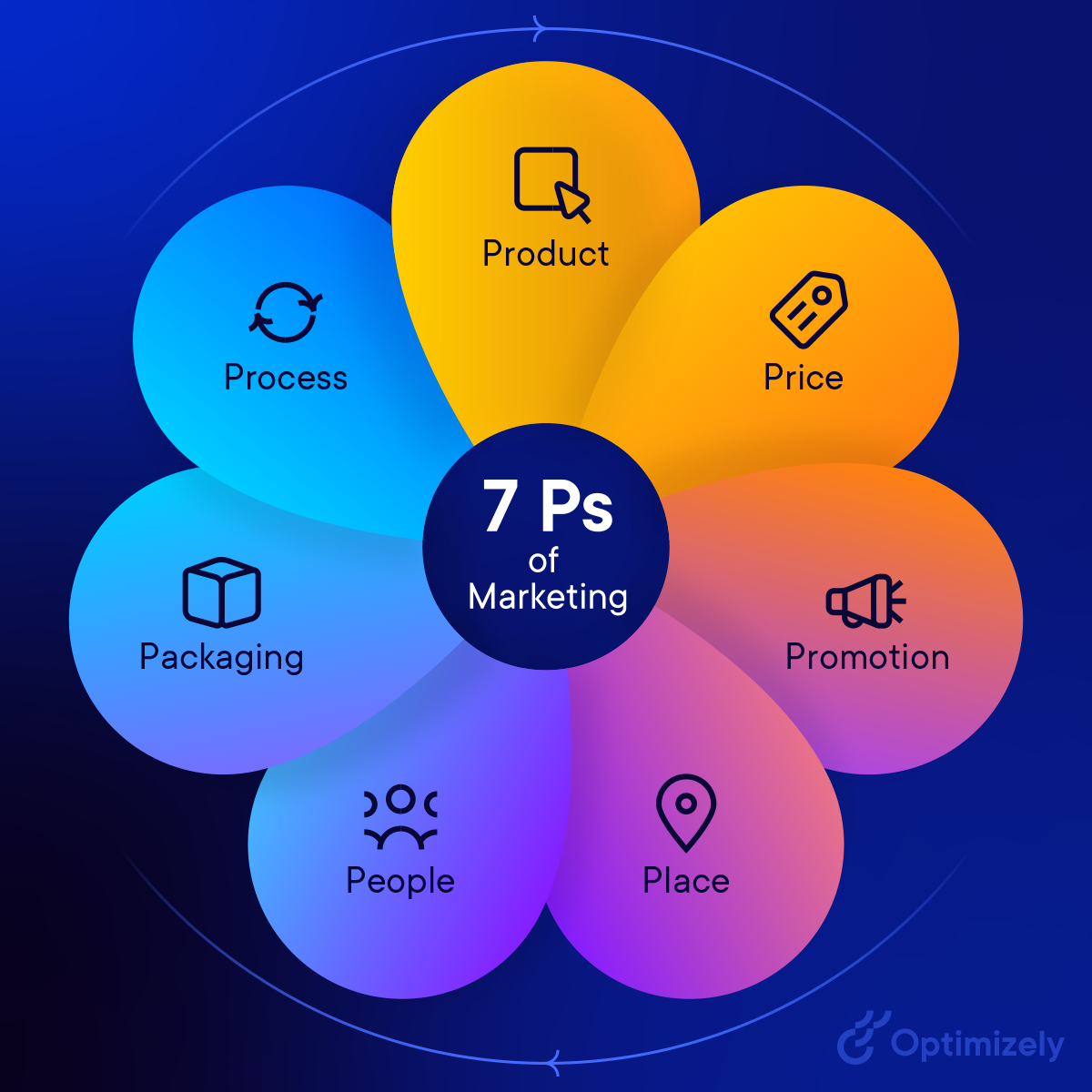
As you develop your marketing strategy, you should focus on the traditional 7 Ps of marketing:
- Product: How you satisfy customer needs
- Price: How much customers are willing to pay for your product
- Promotion: Which channels you use to tell customers about your product
- Place: Where you sell your product
- People: Individuals who help sell your product to customers
- Packaging: How you present your product to the customer
- Process: How you deliver your product to customers
Develop product plans
Once you understand your target customers, you can determine what products best serve those customers' needs. When you know what a customer wants, you can build the right product for that customer.
Developing the product falls outside the parameters of the marketing department, of course, as does producing the product. But marketing should have a prominent and vocal role in determining the product's features, pricing and packaging, as determined by customer needs and metrics.
Identify the key benefits
Savvy marketers know that new customers don't make decisions based on a new product's features but rather on how that product benefits them. It's essential to identify the key benefits of the products you develop – how that product best serves the customers' wants or needs.
Unsuccessful products often have attractive features but unless those features translate into benefits, customers simply don't care. It's not a matter of "if you build it, they will come," it's a matter of meeting your customers' needs.
Craft your positioning and messaging
Product positioning should build on a product's benefits and how the product meets the needs of the target audience. You have to deeply understand what your customers value and then position your product accordingly.
This follows through into all messaging surrounding the product. The product position may be that it's the best for meeting a particular need – the messaging communicates that positioning in a clear, concise and attention-getting fashion.
Don't forget to follow marketing trends as this can really increase your opportunity. For example, user-generated content (UGC) has become a real hit in recent years, so try and embrace this. This has developed from simple referral strategies or word-of-mouth, which can be done via testimonials and case studies that talk about your unique value.
Define your marketing mix
Finally, your marketing strategy should determine how you reach your target audience – what channels and activities you include in your marketing mix. This can include traditional channels like print, radio and television, as well as digital channels, social media and mobile apps.
Marketing strategy vs marketing plan: What's the difference?
The difference between a marketing plan and a marketing strategy is that while a marketing strategy sets the direction and longer-term objectives, a marketing plan goes into detail on the marketing campaigns, marketing tactics, and general timelines for strategy execution.
Bringing AI into the mix: The game-changer
Now, let's talk about the exciting part—how AI is revolutionizing marketing strategies. AI isn't just a buzzword; it's a powerful tool that can take your marketing efforts to the next level. Here's how:
1. Customer insights
AI can analyze vast amounts of data to give you deeper insights into your customers' behavior and preferences. It's like having a super-smart assistant who never sleeps, constantly learning about your audience.
How to use it: Start with AI-powered analytics tools that can segment your audience based on behavior patterns. This can help you create more targeted marketing management and customer campaigns.
2. Personalization at scale
Gone are the days of one-size-fits-all marketing. AI allows you to personalize content and offers for individual customers, even when you're dealing with thousands or millions of them.
How to use it: Implement AI-driven recommendation engines on your website or in your email marketing. These can suggest products or content based on a user's past behavior, increasing engagement and sales.
3. Chatbots and customer service
AI-powered chatbots can handle customer queries 24/7, providing instant responses and freeing up your team for more complex tasks.
How to use it: Start with a simple chatbot on your website or Facebook page to handle frequently asked questions. As you get more comfortable, you can expand its capabilities to handle more complex interactions.
4. Predictive analytics
AI can forecast trends and customer behavior, helping you stay ahead of the curve and make data-driven decisions.
How to use it: Use AI tools to analyze historical data and predict future trends. This can help with inventory management, pricing strategies, and identifying potential churn risks.
5. Content creation and optimization
While AI won't replace human creativity, it can certainly enhance it. AI tools can help generate ideas, write basic content, and optimize your existing content for better performance.
How to use it: Experiment with AI writing assistants for tasks like generating social media posts or email subject lines. Use AI-powered SEO tools to optimize your content for search engines.
6. Ad optimization
AI can continuously test and refine your ad campaigns, improving performance in real-time.
How to use it: Start with platforms like Google's Smart Bidding or Facebook's automated ad optimization tools. These use machine learning to adjust your bids and targeting for better results.
7. Voice and visual search optimization
As voice assistants and visual search become more popular, AI can help you optimize your content for these new search methods.
How to use it: Use AI tools to analyze how people are searching for products or services like yours using voice commands. Optimize your content to match these natural language queries.
Your AI-enhanced marketing strategy
Now that we've covered the basics and the AI possibilities, let's look at how you can create a marketing strategy that leverages these powerful tools:
-
Start with traditional research: Use surveys, interviews, and market research to understand your audience. Then, enhance this with AI-driven insights from social media listening tools and customer data platforms.
-
Set data-driven goals: Use AI predictive analytics to set realistic, achievable goals based on historical data and market trends.
-
Craft your message with AI assistance: Use AI writing tools to brainstorm ideas and refine your messaging. Remember, the final touch should always be human to ensure it resonates with your audience.
-
Choose channels strategically: Use AI-powered analytics to identify which channels your audience prefers and where they're most likely to engage with your content.
-
Create a content plan: Develop a content calendar, using AI tools to generate ideas and optimize your content for different platforms.
-
Implement personalization: Use AI to segment your audience and deliver personalized content and offers across all your channels.
-
Set up automated campaigns: Use AI-powered marketing automation tools to set up campaigns that respond to customer behavior in real-time.
-
Monitor and optimize continuously: Implement AI-driven analytics tools to constantly monitor your performance and make data-driven adjustments to your strategy.
Make Optimizely part of your marketing strategy
Optimizely One, our digital experience platform should be part of your company's marketing strategy. Optimizely's online solutions help you better manage your digital assets, optimize the customer experience, and enhance your company's ecommerce efforts, improving the effectiveness of your evolving marketing strategy.