Your dashboards look great. Your test velocity is high. Your statistical rigor is solid.
But then leadership asks the one question that stops everyone cold: "How much revenue did this generate?"
That's when teams realize they're celebrating engagement "wins" while the data that proves actual business impact sits disconnected in their warehouse.
The result? Frustrated leadership, questioned ROI, and experimentation programs that can't connect to business outcomes.
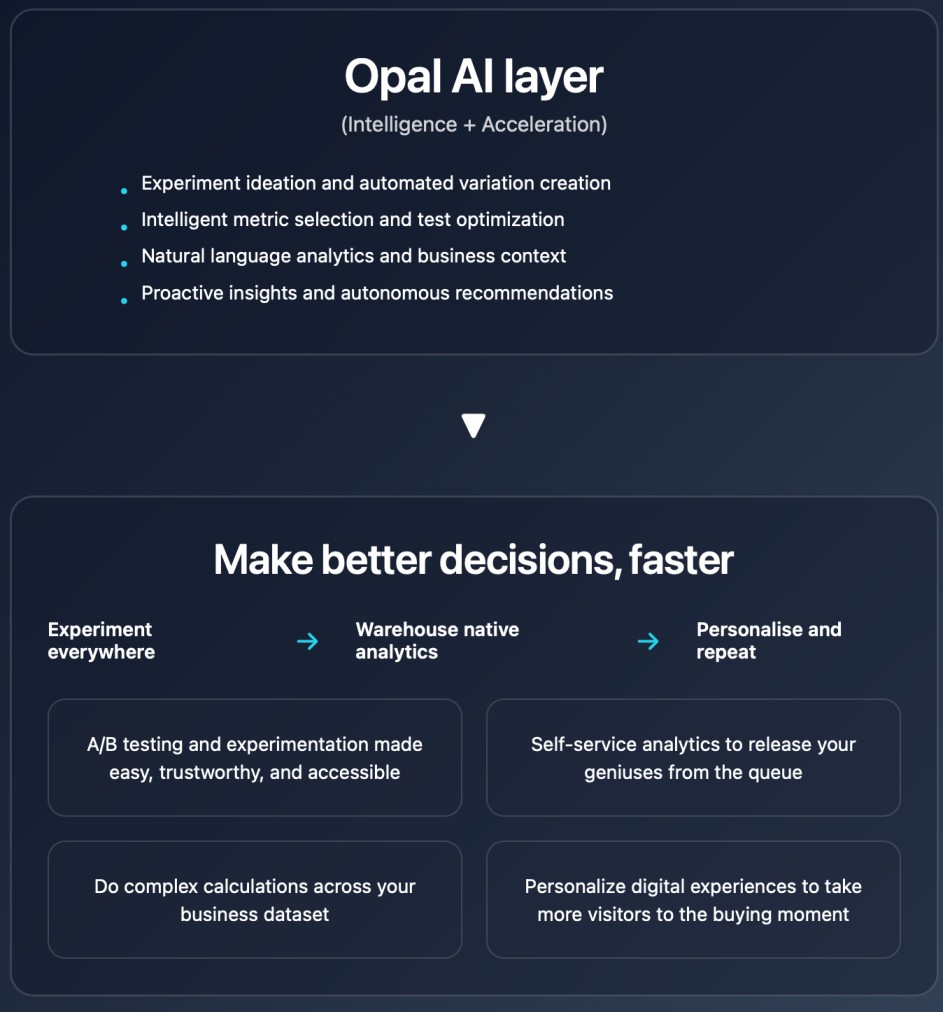
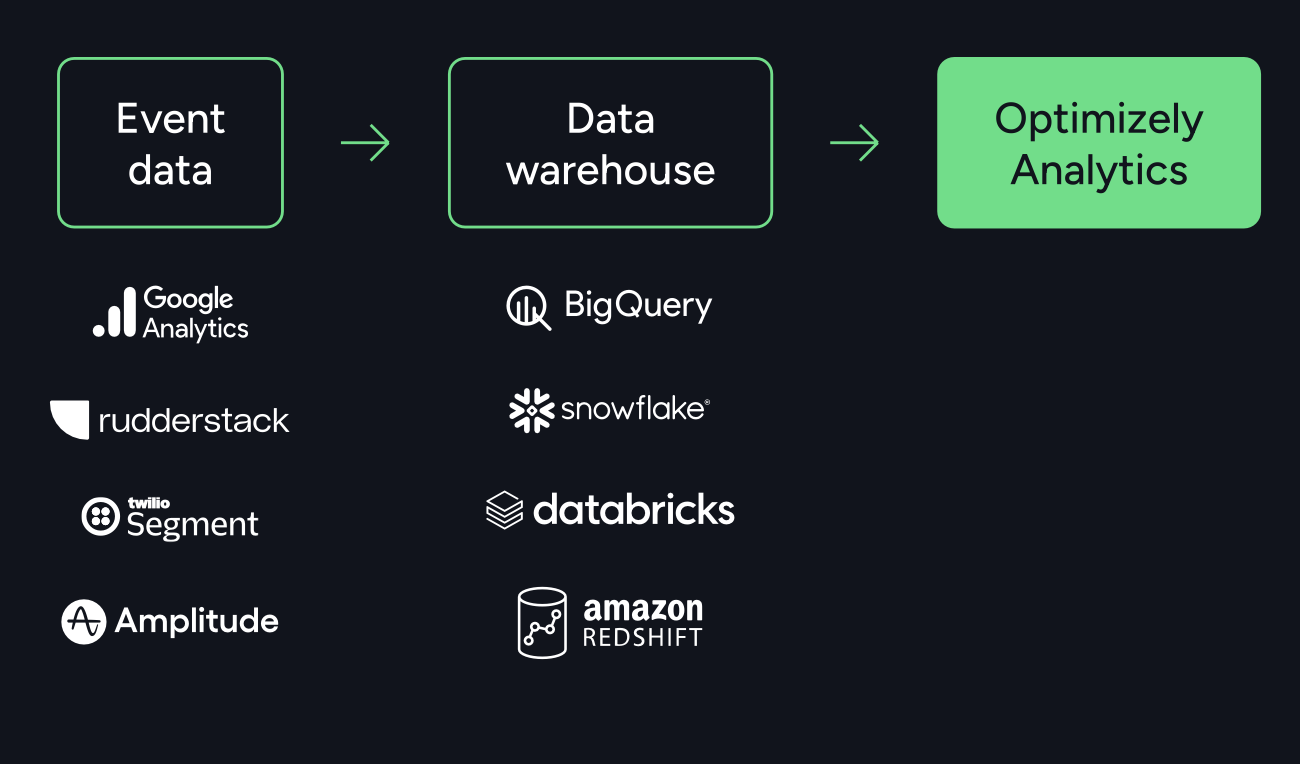
Here's how warehouse native experimentation can help you stop being trapped in data channels that you can't easily access when decisions need to be made.
The infrastructure paradox we're witnessing
Modern experimentation teams seem to be winning infrastructure. But there’s a disconnect between testing activity and business impact.
Modern experimentation teams seem to be winning infrastructure:
- Test velocity has dramatically improved; top-performing teams now run 200+ experiments annuallycompared to the median of just 34
- Statistical confidence in experiment results has dramatically improved
- Teams have invested heavily in experimentation platforms, processes and building a strong culture of experimentation
However, walk into any team running experiments, and you'll hear some version of this story:
"Our testing platform shows engagement wins, but all the revenue data lives elsewhere. When we try to connect them, the numbers don't match between systems.
We either ship variations based on metrics that don't predict business impact, or we declare results 'inconclusive' when we can't prove commercial value."
This disconnect between testing activity and business impact is the experimentation intelligence gap. Teams can prove statistical significance on engagement metrics, but they're missing the insights that drive growth:
- Only 32% of organizations achieve true self-service analytics (Gartner, 2024)
- Business users still wait 7-10 days for new reports (ThoughtSpot Research, 2024)
- Data analysts spend 70% of their time on report building versus strategic analysis (McKinsey, 2024)
This isn't a failure of your experimentation program. It’s that the journey to true business impact was never completed.
The broken workflow burning out your analytics team
Here's the pattern we see everywhere:
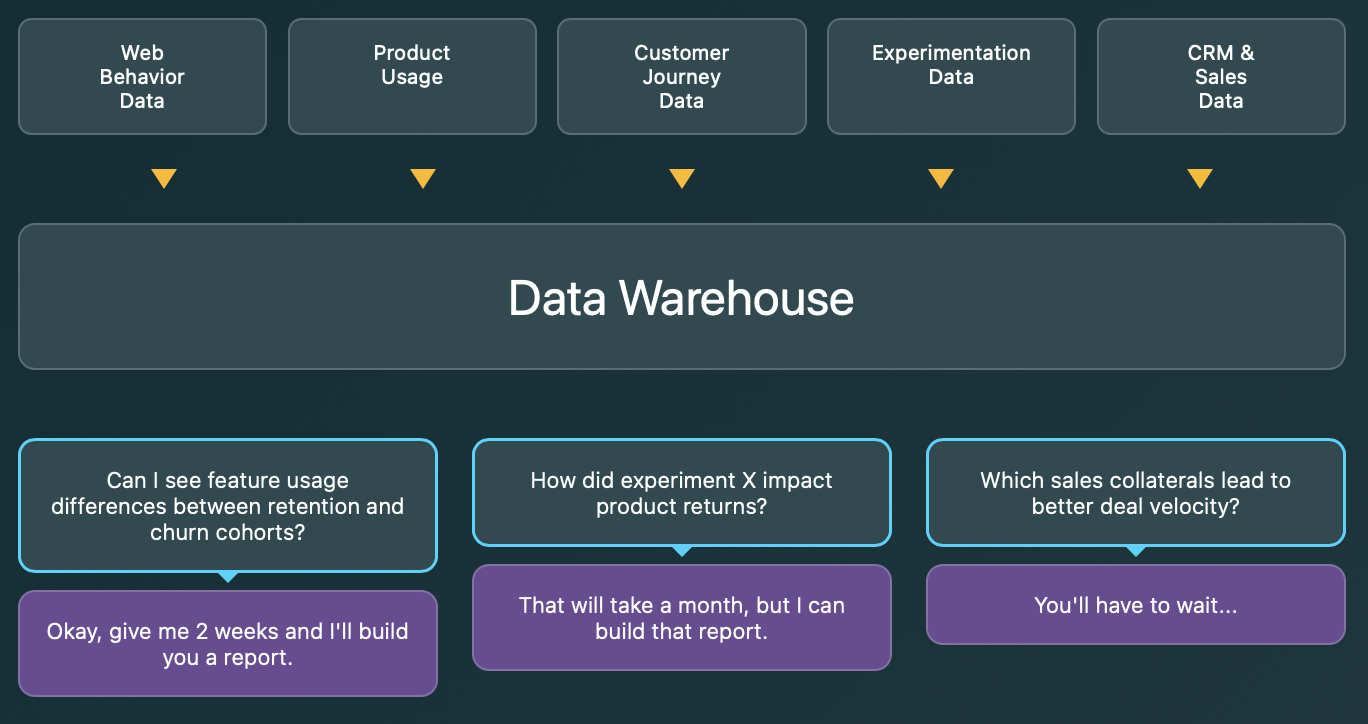
1. Business context data lives securely in the warehouse, but it's inaccessible
Teams operate on intuition rather than using prior experimentation results combined with business metrics to inform what should be tested next.
2. Can't test against events and metrics in other channels, leaving you with leading indicators
Tests focus on engagement signals instead of measuring true business outcomes. This problem is getting worse as AI changes discovery patterns. With ChatGPT and AI search taking over, clicks are becoming less predictive of business value. The metrics that will matter most—revenue, retention, customer lifetime value are exactly the ones trapped in your warehouse.
Plus, you'll have to adapt. For example, watch for the "crocodile effect" where clicks decline, but impressions increase.It's your strongest signal that AI is consuming your content without sending traffic.
3. Analyst backlogs are deep
Workflows take days (or weeks) and delay important projects. Data scientists are writing custom code for every single experiment because business metrics live in the warehouse, while test results live elsewhere.
We've heard from customers whose product leadership rejected this approach entirely: "It doesn't scale."
4. Data disperancy across systems creates uncertainty and decreases trust in the result
And yet, in 2025, some teams are still manually analyzing experiments in Excel, one test at a time. The opportunity cost is enormous.
5. Ship "winners" based on incomplete pictures
Teams either ship variations based on metrics that don't predict business impact or declare results "inconclusive" when they can't connect test outcomes to business metrics.
6. Repeat the cycle while business outcomes stagnate
Both approaches result in frustrated teams and leadership convinced that testing isn't driving results.
But you’re missing out on a lot when your data lives in silos...
Consider these scenarios we see playing out in organizations right now:
- Your product team discovers that an onboarding experiment increased trial-to-paid conversion by 8%. Three weeks later, warehouse analysis reveals it primarily converted users who churned within 60 days. The variation that showed slightly lower immediate conversion drove 23% higher lifetime value.
- Your Head of Growth wants to understand which experiment variations drive not just conversion, but actual customer lifetime value. The warehouse contains behavioral data, subscription data, and experiment results, but combining them into insights requires your data team to build a custom analysis that takes weeks.