You might think your website is pretty great — but do your customers (not to mention your target audience) agree with you? Cos those guys, they’re not so loyal. In fact, up to 88% of users are less likely to return to your website if they’re less than keen on the user experience. And 40% of visitors will hop right on to another website if yours takes more than three seconds to load.
It’s safe to say we’re a flaky bunch these days.
Whether you’re benchmarking against your competitors, considering a website redesign, or simply wanting a broader overview of your website’s performance, undertaking an audit is well worth the work.
What is a website audit?
The short of it: A website audit is an in-depth, data-driven assessment of the experience your website provides to users and helps you evaluate your site methodically, so you can find new ways to improve it.
The long of it: A website audit is a detailed investigation into your target audience’s experience as they interact with your website. This in-depth analysis evaluates how effectively your website strategy and performance align with your business objectives. The end goal is a list of actionable insights you can implement to boost your website’s overall ROI.
A good website audit delves into the nitty-gritty of how your site is currently functioning, scrutinizing various elements such as speed, user experience, and content quality. Ultimately, the goal of a website audience is to improve your digital experience and identify key parts of the website that could do with some improvement.
Website audits are typically carried by digital teams. You can also work with a digital agency to get a neutral, third-party view of your website’s performance.
(Or, you can use our step-by-step checklist below and let your digital team run the site audit themselves. 😉)
Benefits of conducting a website audit
A website audit aims to identify opportunities to improve your site performance and help you better meet your business goals.
It allows you to look at your site with a fresh set of eyes, and how it’s performing through analytics. With a website audit, you’ll have more clarity around the website projects you’re working on, and which initiatives are most beneficial for furthering your overarching business goals.
A website audit is also a great opportunity to get your team organized and aligned around the strengths, weaknesses and opportunities within your current site strategy, so you can better optimize your roadmap.
They’re an integral part of a successful, long-term website strategy. There are several benefits to running a website audit:
- Measuring your website’s performance
- Sense-checking whether your content is in line with the latest brand guidelines
- Trimming content that's no longer needed, or indeed relevant
- Uncovering your strengths and weaknesses
- Understanding how your user experience stacks up against your competitors
- Improving website performance
- Boosting your SEO
- Garnering insights to guide your website strategy and make data-driven decisions to see better returns from your website project
Let’s hammer that last point home a little more: a site audit helps you focus your website strategy on improvements that are likely to drive the most ROI. Without insights into what you’re doing right (and where you’re going wrong) you’re more likely to waste time on projects that won’t drive meaningful results for your website.
Best of all, these insights will better inform and bolster your strategies — they’ll help you make a truly compelling case for why you should focus on improving one aspect of the site over another. And then, you’ll be able to track and show how your new website initiatives are contributing to wider business goals (cue: serious props from the leadership team. 🙌)
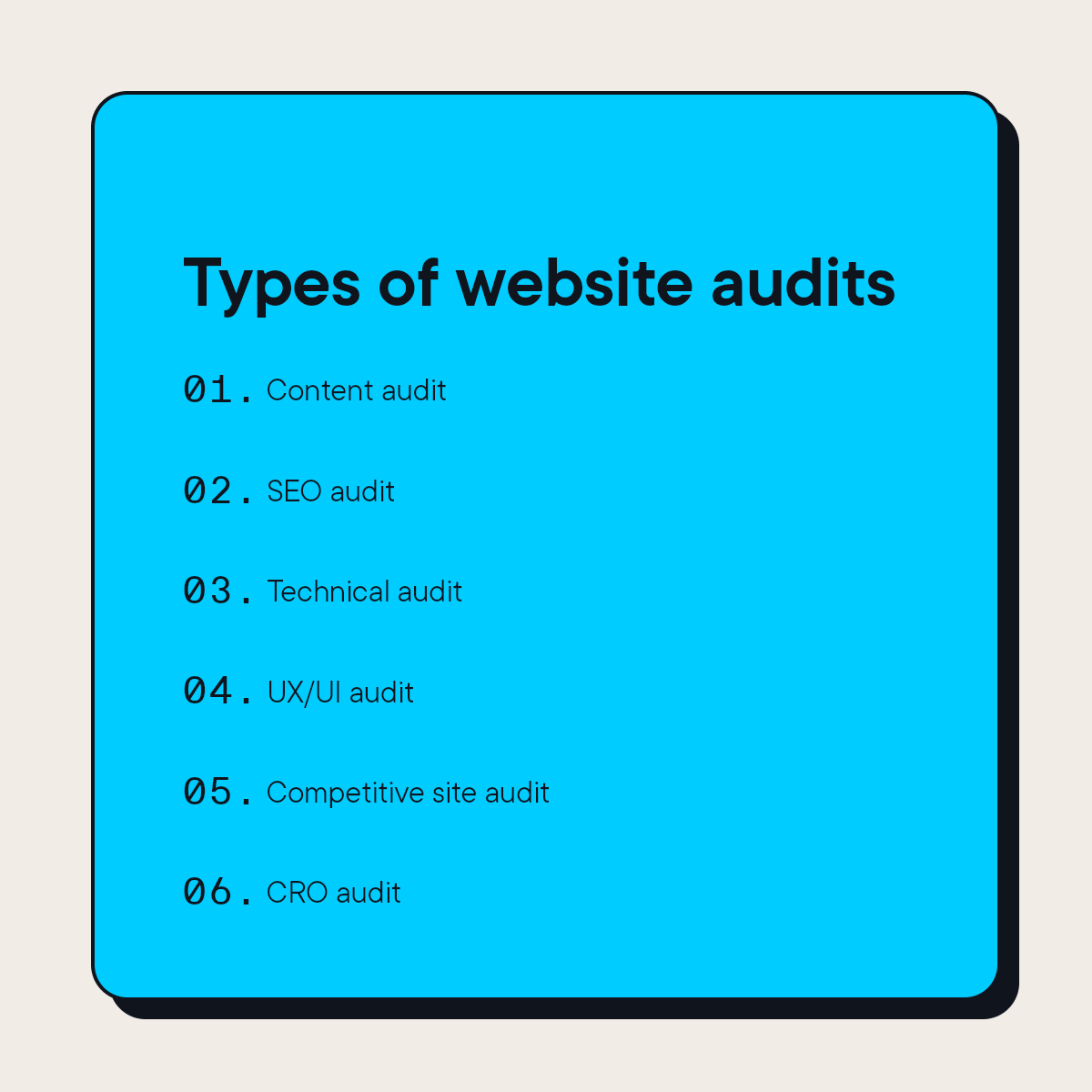
Types of website audits
- Content audit: Got lots of content but not sure it’s working as hard as it could be for you? A content audit is one of the best ways to assess exactly this. Over the course of a content audit, you’ll be taking a close look at individual pieces of content on your website and reviewing both the quality and conversions from content. A content audit is an especially good call if you’re gearing up for a site redesign or migration at any point in the near future. A content audit is especially helpful you’re looking to uncover gaps in your content and figure out just how well existing content meets your audience needs.
- SEO audit: This is where you’ll analyze your site in terms of how well it performs in the SERPs. While you’ll be reviewing some key SEO performance metrics like bounce rate and organic traffic, an SEO audit should also cover on-page elements, like meta tags and headings. You’ll also typically look at performance issues, like page speed, loading times, how well your site is optimized for mobile, and a Core Web Vitals check, all with the aim of boosting your performance in search engines.