Originally founded in 2015 by two industrial designers who set out to make oral care more simple, accessible, and enjoyable. quip is now a leading brand in the healthcare space.
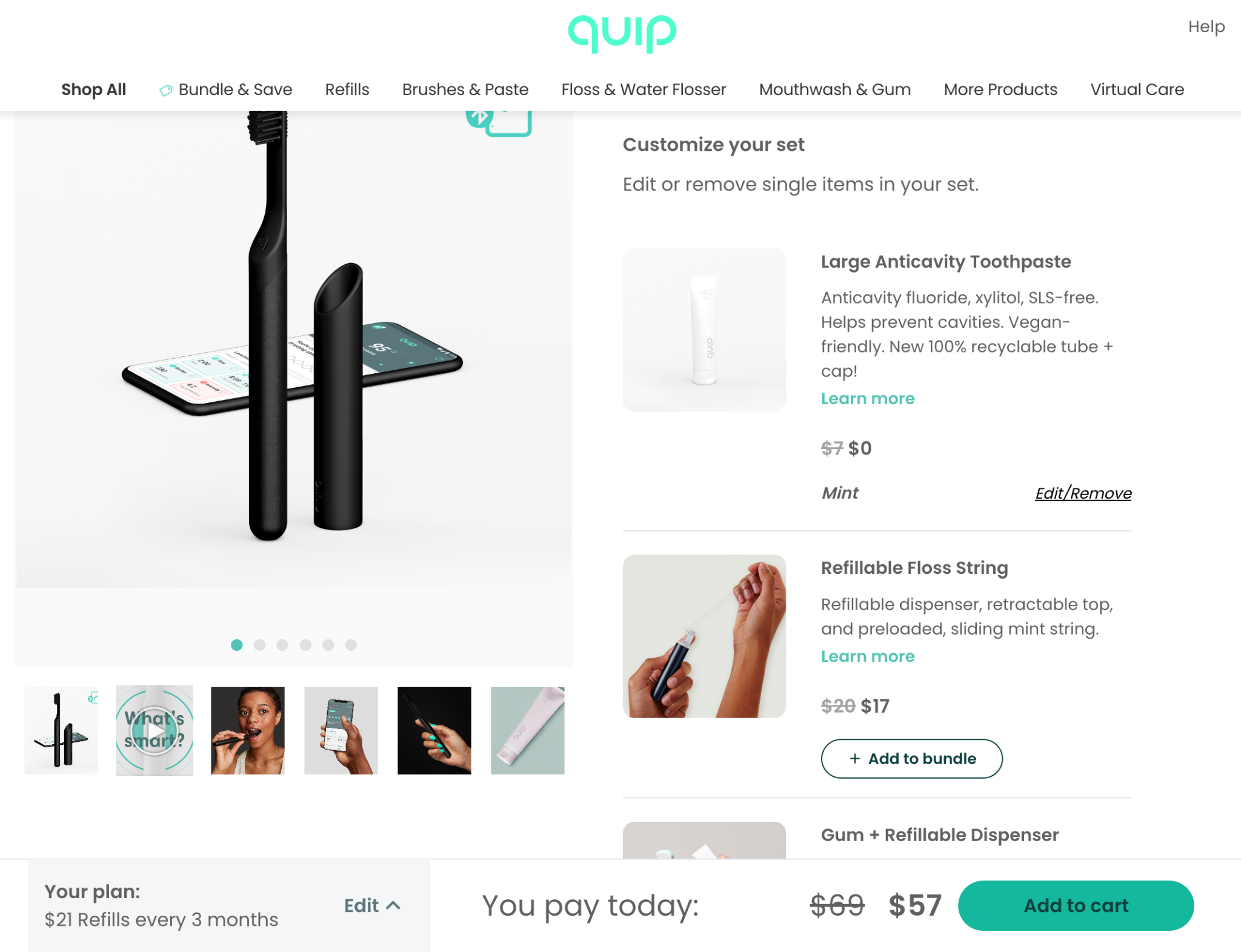
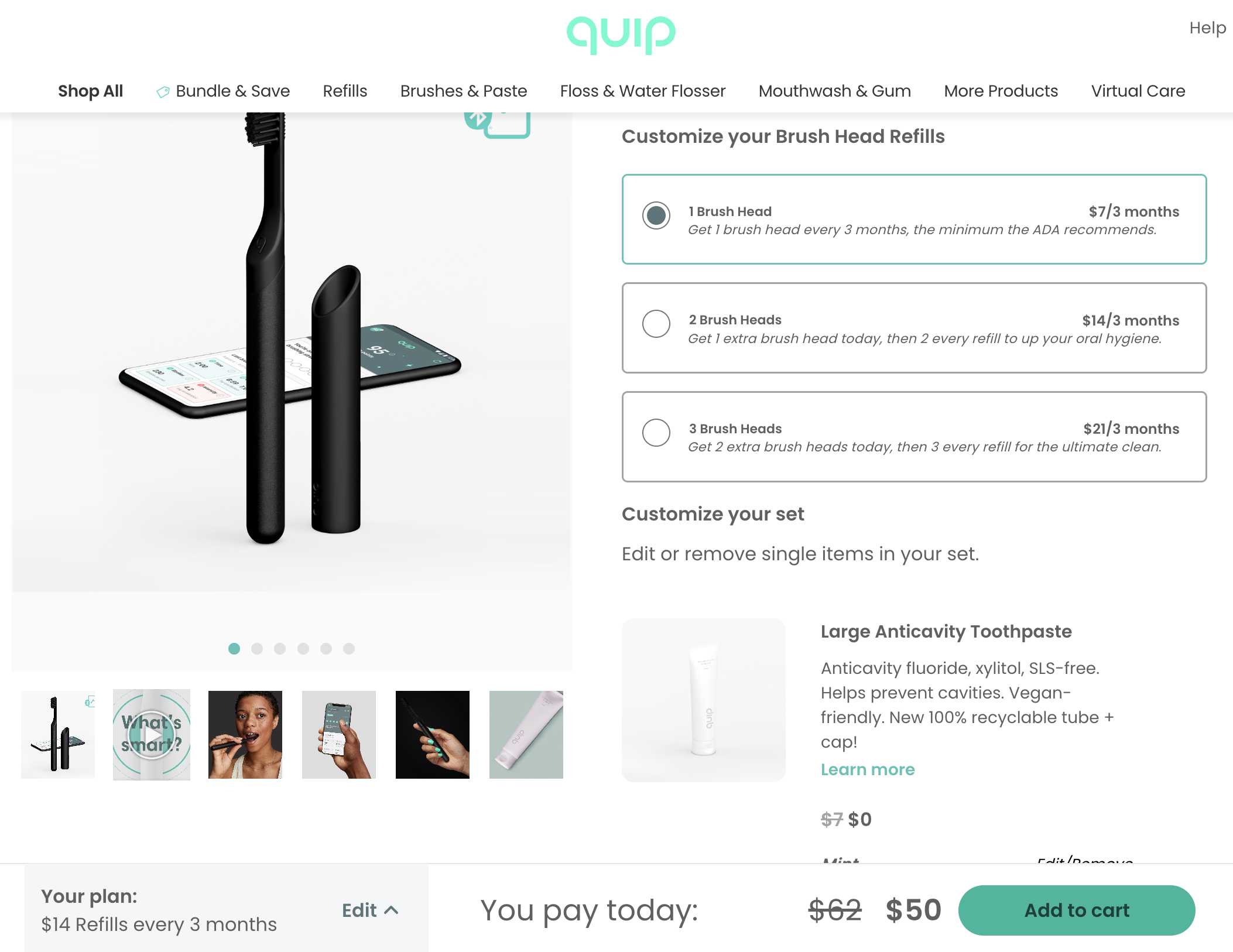
As the first to market direct-to-consumer oral care subscription service, the New York-based company has transformed the industry. quip provides thoughtfully designed personal oral care products and professional dental care services through a digital platform that makes maintaining good oral care health more simple, accessible, and enjoyable. quip's current personal care offerings include the American Dental Association accepted (ADA seal) rechargeable and battery powered adult and kid electric toothbrushes, smart brushes, refillable floss pick and string, refillable mouthwash and gum as well as its newest innovation, the rechargeable cordless water flosser. All products are designed to drive good oral care habits, while keeping products fresh and effective with a quarterly refill delivery service.
quip has gained a loyal following by offering modern products that encourage users to build better oral care habits, , delivering tips and tricks to its many customers and incentivizing them to improve their oral hygiene with its innovative mobile app.
The app pairs with quip smart devices like, for example, a Bluetooth-enabled toothbrush and rewards points to users for completing oral healthcare tasks like successfully brushing teeth twice a day for two minutes each time. These points can then be redeemed for various discounts and prizes. The company has disrupted the oral care industry and continues to grow rapidly, expanding its product offerings and reaching new customers across the globe.
quip's journey with Optimizely started in February 2022
Problem
quip had utilized experimentation sporadically throughout the company’s rise to the top of the oral healthcare industry. However, to increase testing velocity, gain an understanding of what to test, validate ideas and regenerate an internal culture of experimentation throughout the company, a new solution and updated approach was needed.
Timothy P, Director of Digital Product at quip, shared that “the e-commerce team, the marketing teams, the creative teams, the product team… we were hamstrung by our inability to run quick tests.” Timothy P envisioned a culture of experimentation throughout the entire organization, where all teams could independently brainstorm, launch, and report their own tests without needing help and support from the digital team.
The different respective teams needed a holistic testing platform that allowed them to quickly test simple ideas and hypotheses that needed validation like cosmetic, copy or design changes, as well as more complex hypotheses like site navigation changes that required more engineering support.
Therefore, Optimizely’s full experimentation suite, containing both Web Experimentation and Feature Experimentation products was selected by the quip team to support the brand on its A/B testing journey.
Solution
After a smooth onboarding process, the quip team quickly got to work in leveraging Optimizely’s experimentation platforms to elevate the digital experience for its subscribers whilst testing and iterating on new ideas, product launches and conversion optimization and strategy.
The velocity of experiments has dramatically increased throughout the organization as technical and non-technical users are now empowered to run their own experiments and validate their own ideas without directly involving the digital team.
The organization now utilises key Web Experimentation features such as the Visual Editor, and Stats Engine, which makes sure that experiments reach statistical significance as quickly as possible.
Timothy detailed that the accessible and digestible dashboards ensure that it’s easy for teams to set up custom events, simple for all teams to understand which experiments are producing a positive impact and to be confident in the results. The Quip team now usually have “between 3-6 tests running concurrently at any given time” according to Timothy, highlighting the culture of experimentation that has spread through the organization. The expectation now is that all ideas are tested, experimented on, and validated before any further action is taken.
Feature flags have helped quip to gate certain features on their mobile app to safeguard against any potential buggy releases. When releasing application updates on mobile, the turnaround can be slower than web or desktop releases as app updates have to be reviewed by the respective application stores. Therefore, the team utilises feature flags to mark beta features so that, in the event of a feature release not going as planned, they can quickly toggle it on or off, providing both more flexibility and peace of mind.