Experimentation platforms determine how your team tests, learns, and optimizes for years to come. We built this honest comparison because buyers deserve transparent information about tradeoffs, not marketing pitches.
The goal isn't to convince you to choose Optimizely warehouse native experimentation; it's to help you choose what actually fits your needs.
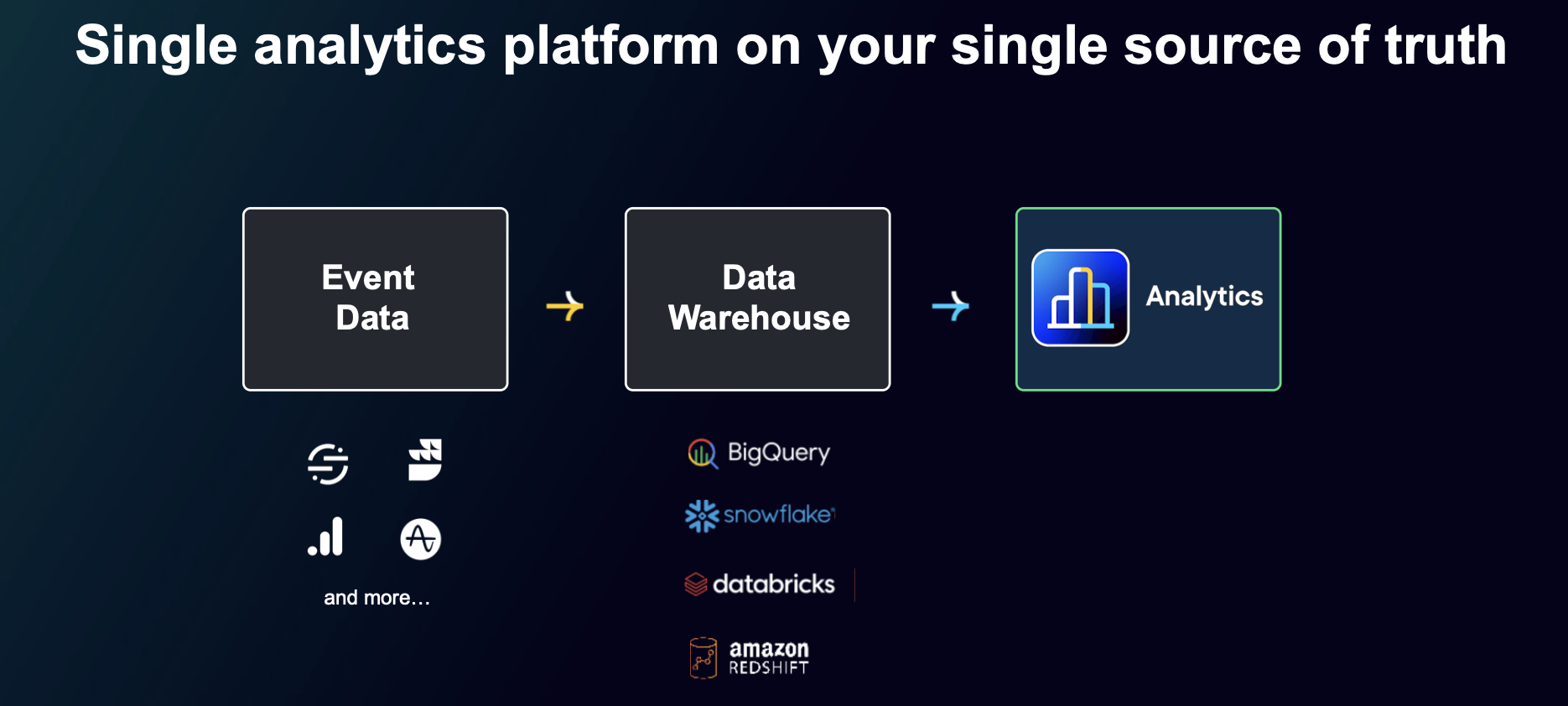
Warehouse-native experimentation platforms work directly with your existing data infrastructure—Snowflake, BigQuery, Databricks, or Redshift—eliminating data silos and connecting experiment results to business outcomes without reverse ETL or custom pipelines.
Here's a value-based comparison of warehouse-native experimentation platforms:
-
Optimizely vs. Amplitude
-
Optimizely vs. Statsig
-
Optimizely vs. Eppo
Let's get started.
1. Optimizely vs. Amplitude
Amplitude built a solid product analytics platform with strong user journey visualization and behavioral segmentation. They have a large community of users who like their interface. Experimentation has historically been a secondary part of their offering.
In May 2026, Amplitude announced it was taking over the Statsig brand, platform, and customer base. The engineers who built Statsig are at OpenAI from the September 2025 acquisition. Amplitude now owns Statsig's codebase without the people who wrote it.
Two experimentation products inside one company
Amplitude already had its own experimentation product before this deal. Now it has Statsig's too. That's two overlapping platforms being maintained by a team that did not build one of them.
For buyers, this changes the math. Anything Amplitude promises about Statsig's capabilities is hypothetical until they ship it. It's like a race car without a driver.
Event-based pricing adds up fast
Amplitude uses event-based pricing, which can become expensive quickly. A typical e-commerce site tracking onboarding steps and cart abandonment can hit 50,000 monthly events with just 2,000 users. As you scale, you pay for events you set up but no longer use.
More importantly, Amplitude locks your data into its system. Want to connect experiment results to customer lifetime value data sitting in your warehouse? You'll need reverse ETL and engineering time to make it work.
The gap
Amplitude excels at analytics, but your data lives in Amplitude's system, separate from the rest of your business data in your warehouse. You cannot easily connect experiment results to customer lifetime value, revenue data, or other business metrics without ETL and engineering effort. As your data infrastructure matures, this mismatch becomes increasingly costly.
The Statsig acquisition does not solve this. Amplitude inherited a warehouse-native platform without the engineers who built it, and until that integration is complete, customers are waiting on a promise, not a product.
Amplitude works if:
- You need product analytics with established user journey tools
- Session replays and heatmaps are critical to your workflow
- Event-based tracking meets your needs and you don't need to connect analytics data to your broader data warehouse
- You are comfortable waiting on an unproven integration roadmap for advanced experimentation
Consider Optimizely instead if:
- You've invested in a data warehouse (Snowflake, BigQuery, Databricks, Redshift) and want experimentation that works directly with your existing infrastructure
- You need to connect experiment results to business data (revenue metrics, CRM data, customer lifecycle information) without ETL
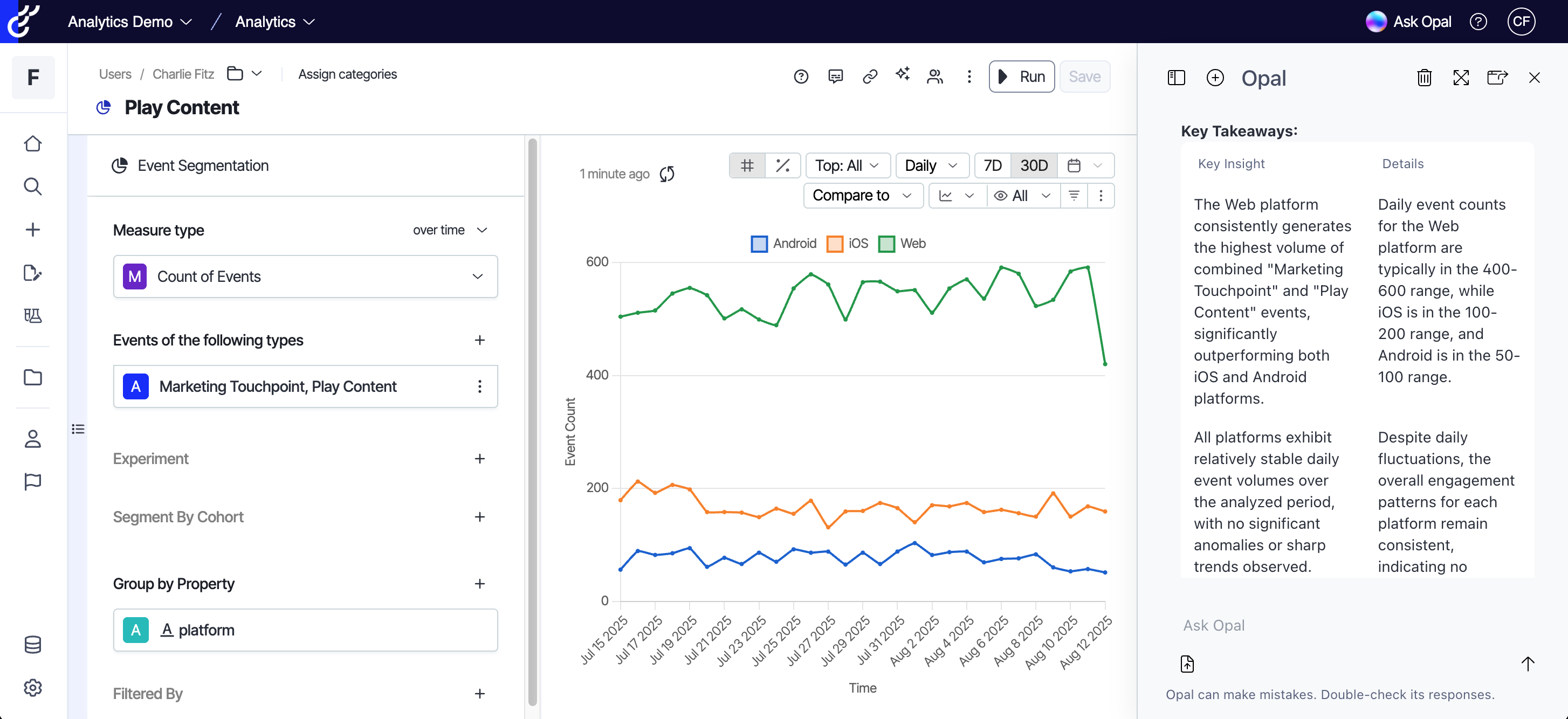
- You want rich product analytics built specifically for experimentation insights, powered by your warehouse
- You need a platform still built and backed by the team that created it
Six reasons to choose Optimizely Analytics over Amplitude:
 Optimizely
 Optimizely