Contextual add-ons and seat selection at checkout on travel pages

13. jan. 2026

Two experiments that show how reducing friction and surfacing the right offer at the right moment can lift order value and keep customers moving toward purchase.

  • WHO: Digital, growth & CRO teams  
  • INDUSTRY: Hospitality, Travel & Recreation  
  • IMPACTED PAGES: Mobile checkout, checkout page 

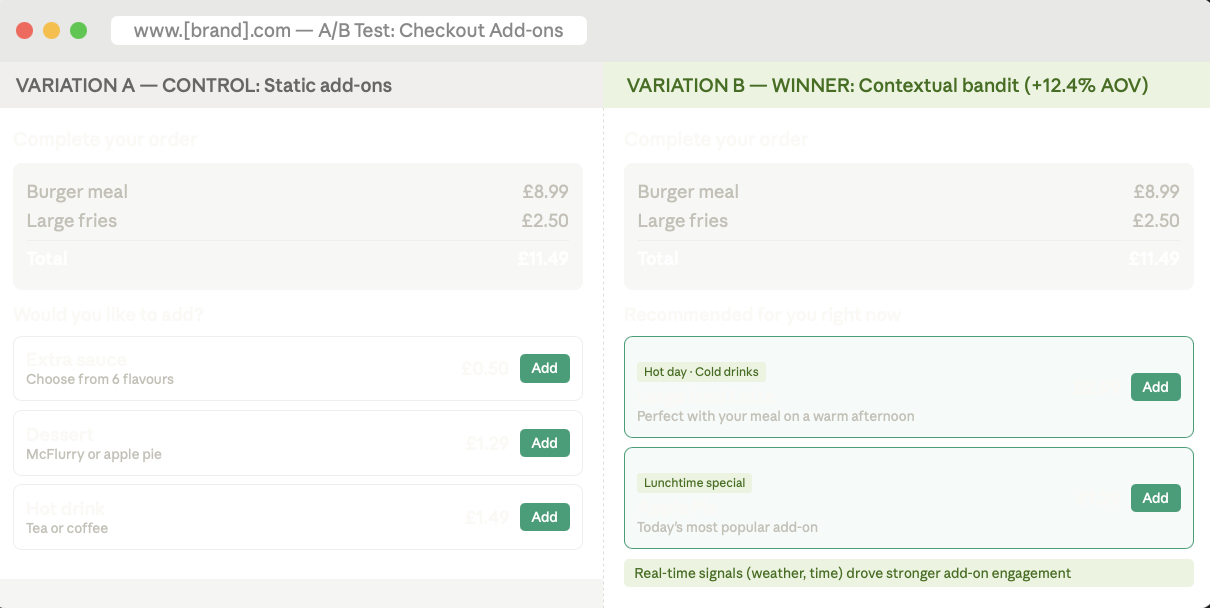
Experiment 1: Contextual bandit to surface personalized add-on offers at checkout

Hypothesis: Using Contextual Bandit to automatically surface relevant add-on offers based on real-time conditions (e.g., weather, time of day) will increase add-on attach rate and lift average order value.
Demo form testImage source: Optimizely

Results:

  • +12.4% Average order value uplift

Takeaways: 

  1. Personalized add-ons increased average order value by 12.4%. 
  2. Contextual recommendations feel more relevant to customers, driving stronger engagement with suggested add-ons. 
  3. Most add-ons were low value items and impulse purchases. 

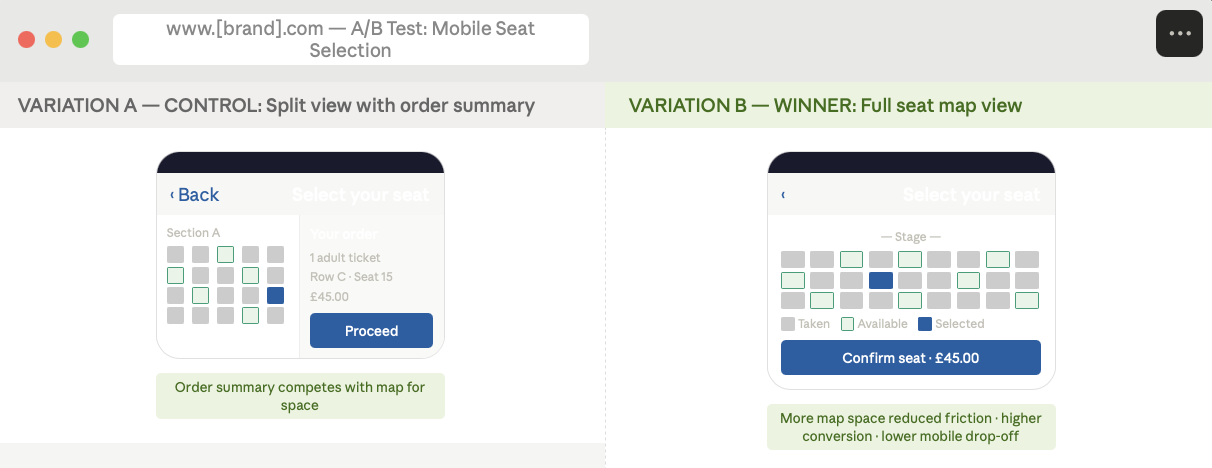
Experiment 2: Giving the seat map more screen space on mobile 

Hypothesis: If the seat map is given more screen space by hiding the order summary, then customers will find seats more easily because reduced clutter improves focus on the selection task. 

Fewer form field testImage source: Optimizely

Results:

  • Decrease in mobile drop-off rate

Takeaways: 

  1. Seat selection view was redesigned to prioritize the map, reducing friction. 
  2. Resulted in higher conversion rates, showing customers completed more purchases. 
  3. Mobile drop-off decreased, confirming streamlined seat selection kept users engaged. 

Travel checkout is not one experience

A seat map on mobile. An add-on offer timed to the moment. A payment step that flows or frustrates. Each one is a test. The Experimentation Ideation Agent surfaces what to prioritize, and the Experiment Summary Agent tells you which changes travel across markets and which stay local. 

And here are more use cases from the Hospitality & Travel industry: