Reducing friction and distraction at retail checkout

Jan 12, 2026

Four experiments that reduce distraction, increase trust, and help more visitors complete their purchase.

  • WHO: E-commerce & CRO teams
  • INDUSTRY: Retail
  • IMPACTED PAGES: Cart page, checkout flow, mini-cart

Experiment 1: Removing distractions from the cart page

Hypothesis: If messaging is adjusted and elements unrelated to a visitor's purchase are removed from the cart page, focus will be dedicated to the transaction.
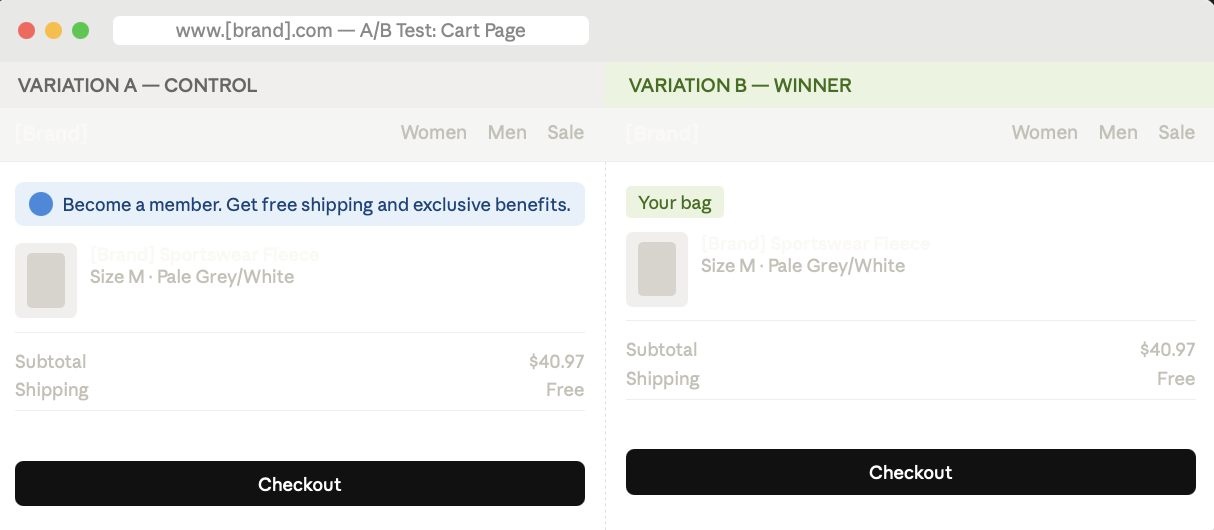
Membership on checkout page testImage source: Optimizely

Results:

  • +$5.5M Incremental revenue

Takeaways:

  1. Removing the banner promoting membership from the cart page was an effective tactic for keeping visitors focused on the transaction.
  2. Merely adjusting copy did not have a meaningful impact on visitor behavior.
  3. Removing the membership promo banner led to a significant decrease in new registrations.

Experiment 2: Displaying accepted payment methods at checkout

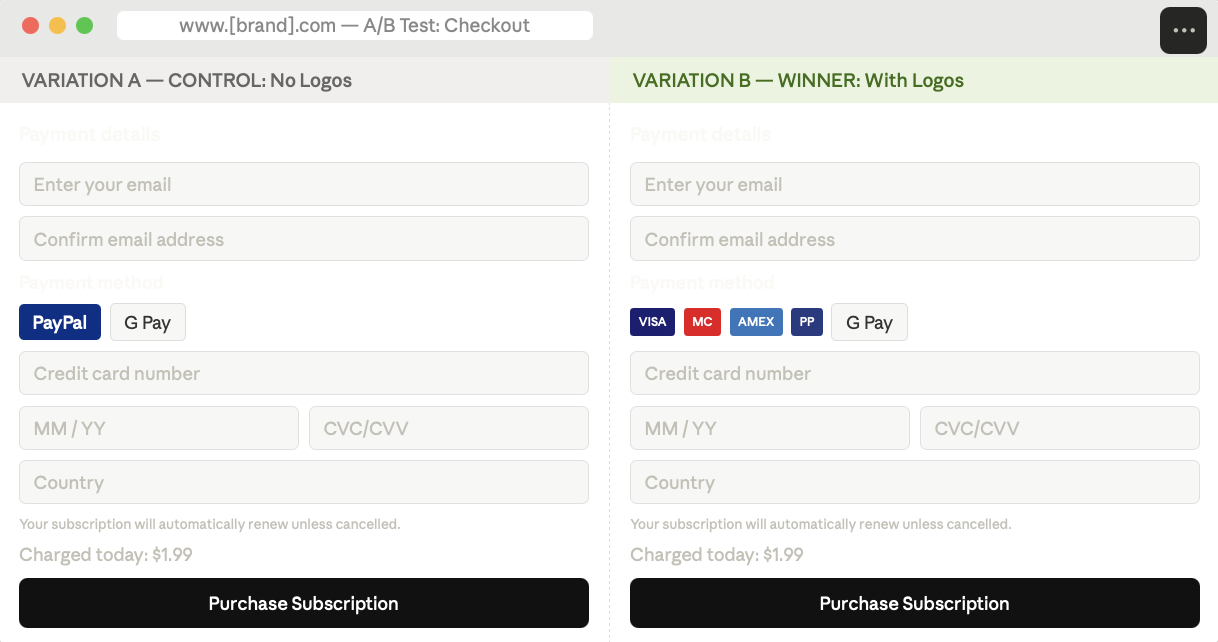
Hypothesis: If accepted credit card brands are prominently displayed at checkout, this will increase customer trust and result in higher conversions.

accepted payment methodsImage source: Optimizely

Results:

  • 5% of purchases shifted away from high-fee payment providers
  • +$2.7M Incremental revenue

Takeaways:

  1. Sometimes, experimentation uncovers learnings you have not previously been looking at.
  2. Financial gains are not always found via conversion, also through cost savings and impacting LTV.

Experiment 3: Multi-armed bandit optimization across checkout

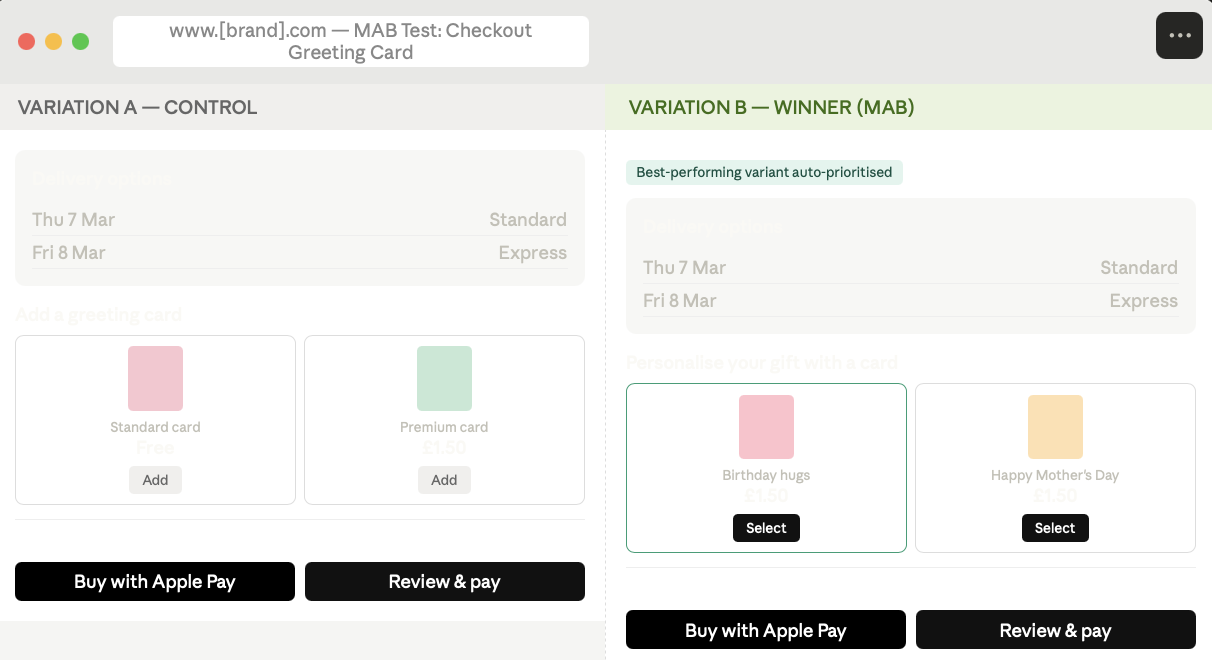
Hypothesis: If multi-armed bandit experiments are run across the checkout flow, more users will purchase paid greeting cards because the best-performing experience will be automatically prioritized.

Multi-armed bandit testImage source: Optimizely

Results:

  • +24% Additional paid card purchases
  • +8.4% Increase in Average Order Value

Takeaways:

  1. Tested greeting card pricing and flow changes, leading to a 24% increase in users selecting a paid card.
  2. Using sequential statistics with bandit allocation ensured traffic was routed to winning variants without manual intervention.
  3. Optimized checkout flow raised average order value by 8.4%, showing that small add-on nudges can drive significant revenue impact.

Experiment 4: Improving mini-cart functionality

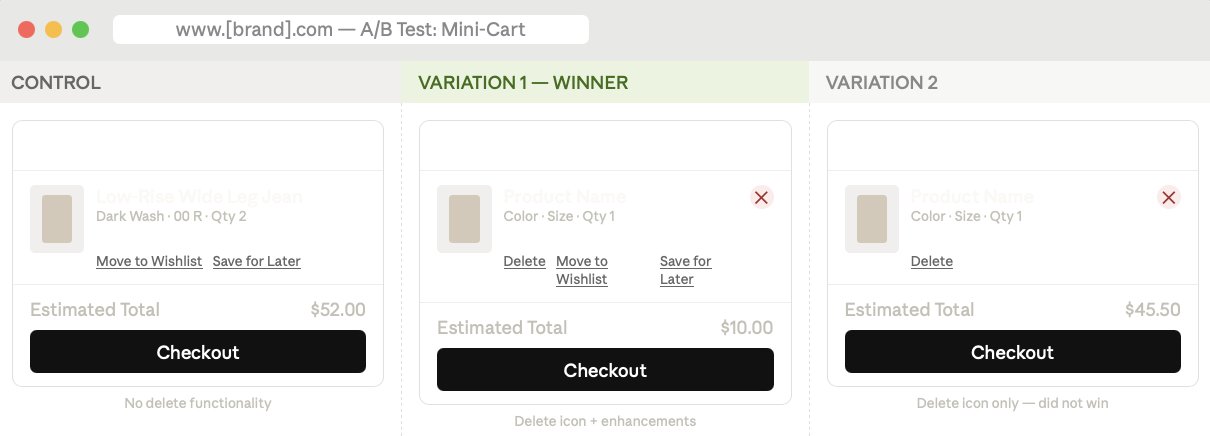
Hypothesis: By adding a delete icon and functionality to the mini-cart flyout, more users will initiate checkout directly from the mini-cart, reducing the number of steps to convert.

Mini cart testImage source: Optimizely

Results:

  • +7.89% Increase in mini-cart checkout clicks
  • +22.89% Increase in Submitted Orders*

*For visitors who engaged with the mini-cart

Takeaways:

  1. Implementing the delete functionality along with other enhancements proved to be an effective method in getting more users to checkout directly from the mini-cart.
  2. For users who engaged with the mini-cart, we saw a significantly positive result across numerous metrics for Variation 1 above the Control.
  3. Adding the delete icon and functionality alone, however, did not prove to be a winning experience, as observed by Variation 2.

The cart is where good sessions go to die

Every distraction, every confusing step, every missing signal is a purchase that does not happen. And you rarely find out why. The Experiment Summary Agent checks your experiment setup before launch — metrics, guardrails, analytics connections so a misconfigured test on a high-traffic checkout page does not cost you a run cycle.

And here are more use cases from the retail industry: