- WHO: E-commerce & CRO teams
- IMPACTED PAGES: Product pages, product listing pages, product detail Pages
- INDUSTRY: Retail
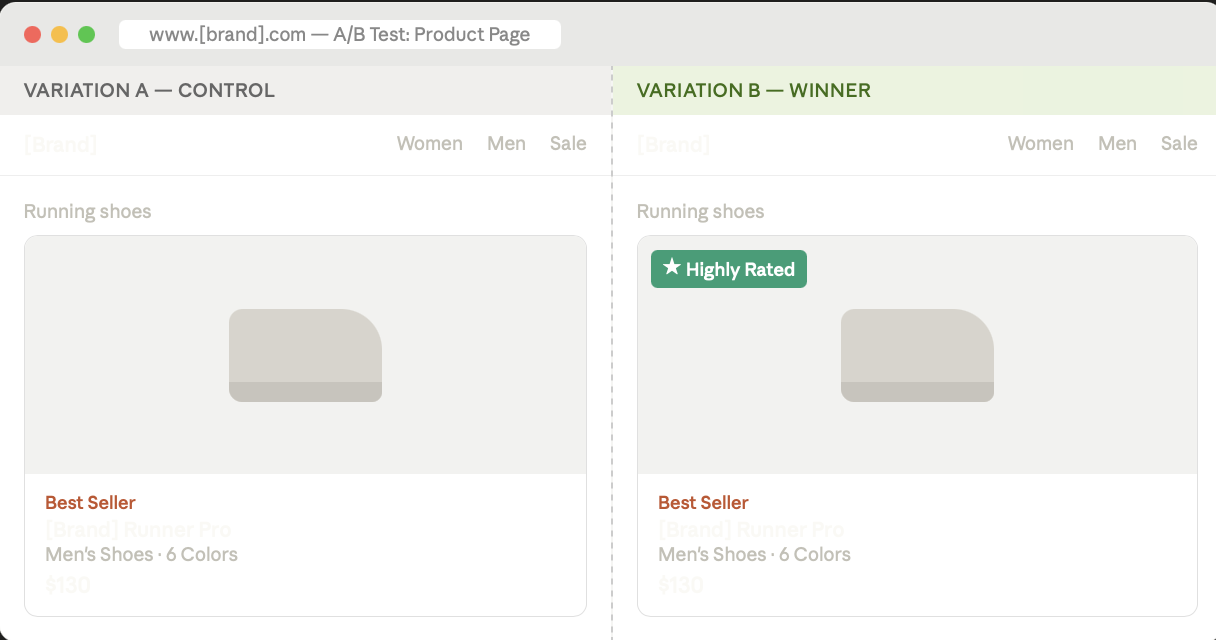
Experiment 1: Using 'Highly Rated' badges to drive add-to-cart on product pages
Hypothesis: Applying 'Highly Rated' badges to items with positive reviews will call greater attention to popular products, increasing the likelihood that those items will be added to cart.
Results:
- +1.98% increase in Add to Cart
- +0.27% increase in Product Page Views
Takeaways:
- 'Highly Rated' badges drive more traffic to product detail pages and add-to-cart behavior for badge-eligible items.
- Gains achieved via badge-eligible items were impactful enough to cause significant uplifts across the entire inventory. The halo effect is real.
- No significant impact was observed for purchase conversion, indicating the badge influences early-funnel engagement rather than the final purchase decision.
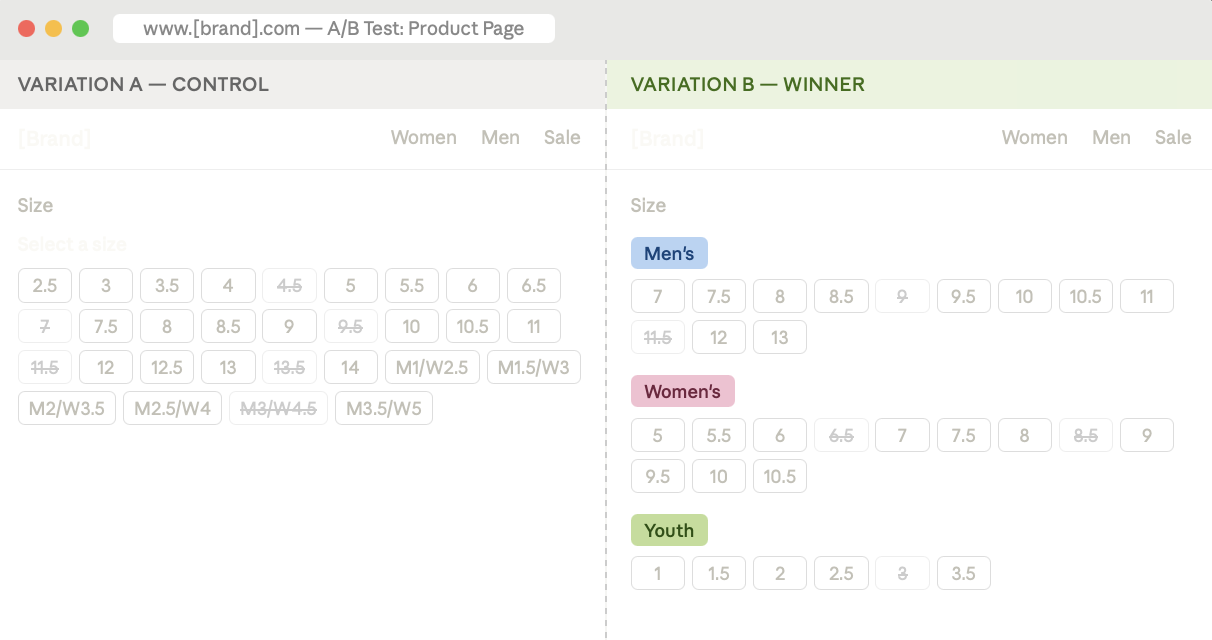
Experiment 2: Using size filters to reduce friction on product pages
Hypothesis: If size filters are given more exposure and simplified to include both men's and women's sizes as a single feature option, visitors will be more likely to find footwear of interest, increasing revenue.
Results:
- +2% increase in Revenue per Visitor
- +$12.7M incremental revenue impact
Takeaways:
- Consolidating size filters and surfacing them above the fold significantly increased revenue per visitor. The experiment removed the friction of clicking into a PDP only to find your size is out of stock.
- Size filter engagement increased by 33.8%. That kind of proxy metric confirms the friction was real, and removing it mattered.
Your product page is already telling you what to do next
Every hesitation, every abandoned cart, every filter click that leads nowhere is a signal. Most teams log it as a metric. The Experimentation Ideation Agent acts on it, reading your product pages and surfacing what to test next, ranked by potential impact.
And here are more use cases from the retail industry: