Okay let's settle something real quick
Despite what *some people* might think, not 👏 everyone 👏 can 👏 write. And I mean that with full sincerity, zero condescension.
Writing well — like actually well — isn't a personality trait or a sign of intelligence. It's a specific, practiced skill, and most people weren't hired for it. The ability to close a deal, lead a team, or build a product has absolutely nothing to do with whether you can open a LinkedIn post in a way that makes someone stop scrolling. Writing real good is a whole different flex.
Which is why "AI is coming for content jobs" is hard to take seriously. AI can generate words, sure. Congrats. What it can't do is tell a story that makes someone feel something, stand out from the sea of samey, or bring the kind of specific, lived, raw human perspective that makes people stop and think "YES, exactly that".
☝️ All that to say: I genuinely would rather someone ask me to write for them than publish any level of garbage, or something that sounds like it was assembled from parts.
But what we do need is a proper, well-thought-out, descriptive brief. And no, "write a LinkedIn post for me" is not suffice, and here's why... with some real-life (genuinely) but anonymous stories.
Hold onto your seats — especially those of you that work in content):
Exhibit A: The copy-paste incident
A friend of a friend (👀) spent time writing a set of campaign comms guidelines for her leadership team — full templates, clear instructions, the works. Headers like "Format", lines that said "Personalize this bit" and "Copy-paste this bit here".
The kind of document that does all the thinking for you... provided you actually read it.
Safe to say, multiple members of leadership did not read it. They selected all, copied, and published... the instructions, pointers, everything. Yep, every single "copy-paste this bit" made it out into the world exactly as written.*
And it's not about people being careless. When you're moving fast, the words are already there, and — unfortunately, more often than not — promotional content isn't a top priority in (non-content) roles, these things can happen. There are assumptions on both sides of the handoff, and that's where things go wrong.
*To be fair to them, it clearly happens to the best of us. Marie Claire Australia recently published an article with the AI prompt still sitting in the body copy. At least that friend of a friend's leadership had the excuse of being busy. Marie Claire had an editorial team.
Exhibit B: The 13-year-old nobody was briefed on
An anonymous marketer I know was asked to ghostwrite LinkedIn posts for a VP of Sales. The brief: weave in some stuff about being a dad to his 13-year-old daughter, "to make it feel more human." That was it. No name, no personality, no anecdotes, nothing she's into, nothing she's said. Just "I have a 13-year-old daughter" and an expectation that warmth would appear out of thin air.
So the marketer wrote it anyway. A generic-but-plausible swim meet. Vague pride about a school project. The kind of soft-focus parenting line that could apply to literally any teenager on the planet. It went out under his name, in his voice, and did exactly what he wanted — because nobody reading LinkedIn comments is fact-checking the emotional specificity of a stranger's family life.
Does his daughter even swim? Who bloody knows.

Exhibit C: The hardship that didn't really happen
Someone on a content team was once asked to draft a "vulnerable" post about a personal failure. The exec wanted the engagement that comes with appearing human.
Problem: the exec couldn't think of an actual failure, so the marketer was asked to write one — not embellish one... totally invent one, from nothing, for someone else to claim as a formative life experience in front of twelve thousand followers. Nice.
The REAL issue: The handoff is broken from both sides
None of this is scandalous. Most of what reads as authentic on LinkedIn is probably written by someone who has never met the dog, the daughter, or the moment of vulnerability in question. Someone who was given approximately 0% of the raw material needed to fake it convincingly.
And that right there? That is the gap we're talking about. Not that ghostwriting happens — people are busy doing the jobs they were hired to do, and we're cool with that. Instead, the gap is the handoff between the person with a voice and the person doing the writing. It's another broken marketing process, guys (shock).
The exec knows what they think. The writer knows how to say it. But the thing that sits between them — a real, structured understanding of how that specific person actually sounds, thinks, and communicates — rarely exists anywhere outside of either one's head.
But guess what? I built a fix with AI
I ghostwrite for several people at my company on a regular basis. For a long time that meant the same thing it always does: reverse-engineering someone's voice from memory, vibes, and whatever emails or messages I could dig up, every single time, from scratch.
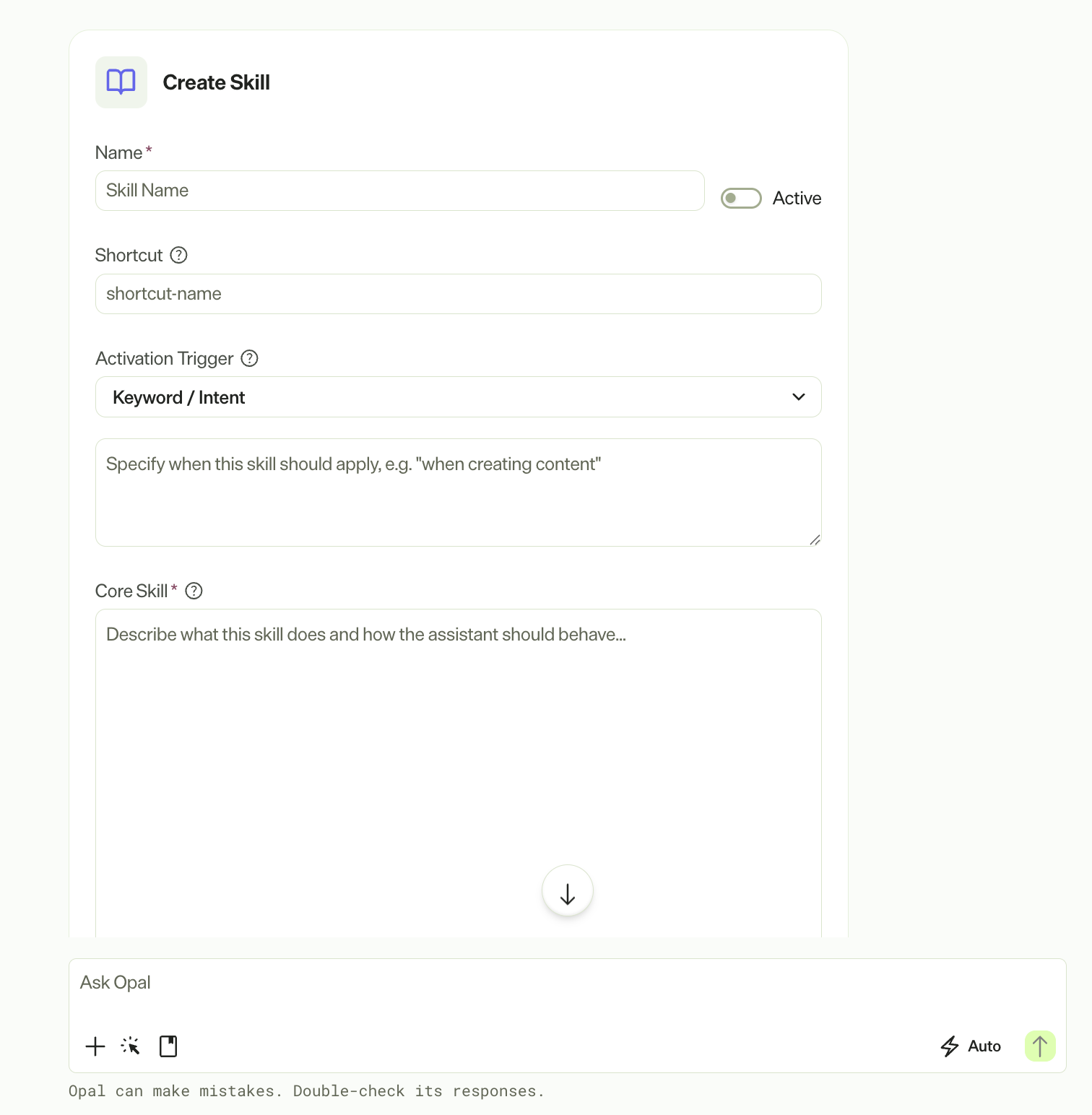
So, to combat annoying, repetitive tasks that I don't like spending my time doing, I built actual voice profiles.
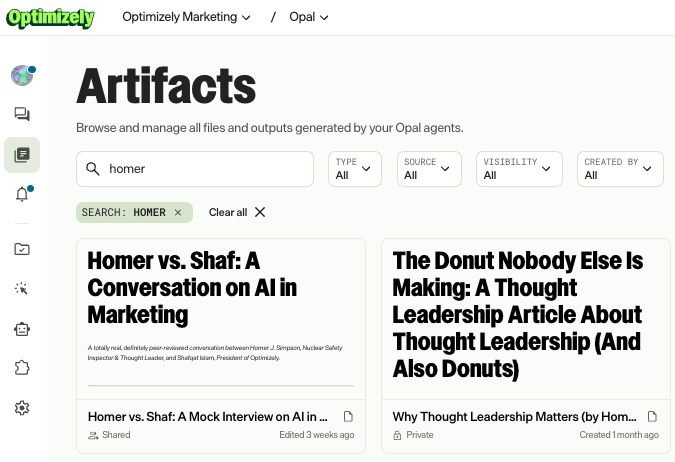
"What are voice profiles?", I hear you say. They are structured documents within Optimizely Opal that capture not just tone but specifics. Things like: