
Make me uncomfortable: What it takes to build a brand that stands out

Dan ReidDan Reid
18. aug. 2026

Dan Reid, Director of Brand and Creative, Optimizely Interview by Julianne, Head of Content Strategy, Optimizely

Most brand leaders want their team to feel good about the work. Dan Reid wants them to feel slightly unsettled. There's a reason for that.

The first time Optimizely's internal team saw the new identity, someone said: "I don't know if I like this." According to Dan Reid, Director of Brand and Creative, that was exactly the right reaction.

Dan led the creative side of Optimizely's rebrand alongside agency partners Ragged Edge, navigating 12+ months of direction changes, VO takes, AI-generated landscapes, and at least one uncle named Bill. We sat down with him to talk about what it truly means to build a brand with a point of view, and why the most important thing he ever said to his team was "make me uncomfortable."
You're known for telling your team "make me uncomfortable." Where does that come from?

It comes from watching what happens when creative people play it safe. You get work that is technically correct and completely forgettable. The brief gets answered but the opportunity gets missed. When I say make me uncomfortable, what I mean is: push past the version of this that everyone would approve of in the first meeting. That version is never the right one. The right one takes a second. It makes you sit with it. It might make someone in the room say "I don't know if I like this" before they realize they love it.

When I say make me uncomfortable, what I mean is: push past the version of this that everyone would approve of in the first meeting.

Dan Reid|Global Director of Brand and Creative, Optimizely

What was the brief you gave Ragged Edge going into this rebrand?

The brief behind the brief was really about honesty. We had become a genuinely different company. The AI platform, the product depth, the category positions we'd built. None of that was showing up in how we looked or how we talked. So the brief was: reflect who we've actually become. Don't describe us, capture us. And don't make us look like every other B2B tech brand doing a rebrand in 2024, because there are a lot of them and they all look the same. That last part was important to me. If the work doesn't feel distinct, we've failed before we've started.

What happened when Ragged Edge came back with the first concepts?

There was a moment, and I think anyone who has been through a real rebrand knows this moment, where the work lands and you feel it before you can explain it. Some of it landed immediately. Some of it made people nervous in exactly the way I'd hoped. The discomfort is information. When something makes you uncomfortable in a creative context, it usually means it's doing something real. The question is whether you have the confidence to stay with it long enough to find out. We did. And working with the internal team alongside Ragged Edge meant we could pressure-test ideas fast, push them further, and make sure what we were building actually lived and breathed inside the organization, not just in a brand deck.

You once told your team the best creatives should take an improv class. Why?

Because the best creative work happens when people stop protecting their ideas and start building on each other's. Improv teaches you to say yes and, not yes but. It teaches you to listen before you react. It teaches you that your first instinct isn't always your best one and that something unexpected can take you somewhere better than where you were headed. That's true in a brainstorm. It's true when you're reviewing VO takes at eleven in the morning trying to decide between what I can only describe as ambivalent menu-reading Uncle Bill and normal Uncle Bill. You have to stay open. You have to be willing to be surprised by what works.

"You have to be willing to be surprised by what works. That's true in a brainstorm. It's also true when you're choosing between ambivalent menu-reading Uncle Bill and normal Uncle Bill."

Dan Reid|Global Director of Brand and Creative

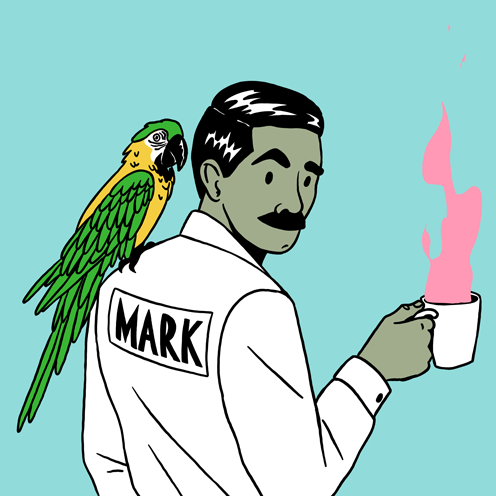
You said in a team pep talk that "Mark Eting lives in all of us." What did you mean?

I'm still slightly embarrassed that got written down. But I'll stand by it. What I meant was that marketing, real marketing, isn't a department. It's a way of thinking about how you show up, how you communicate, what you make people feel. The best brands I've worked on have that instinct distributed across the whole team. Everyone has a point of view on what the brand should feel like. Everyone is a little bit Mark Eting. The job of the creative team is to channel that and turn it into something that actually reaches people.

There's a story about bent trees. Tell us about that.

Jhon, one of our designers, had used some AI-generated landscape imagery that included trees with interesting, bent shapes. He came back later and had removed them because he assumed I wouldn't like them. I had to tell him: FWIW, I didn't mind the bent trees. It's a thing. And it became a bit of a shorthand for the team after that. The bent trees are a thing. Meaning: the imperfect, unexpected, slightly strange element is often exactly what makes something feel alive rather than generated. We were building a brand about human-led creativity in an AI moment. The bent trees belonged.

What does the new brand mean to you, having lived inside the process?

It means we finally said the thing. For a long time, Optimizely had this incredible platform and this genuine belief in what marketing could be, and the brand was just… not keeping up. Now it is. The new brand has a point of view. It has energy. It looks like a company that actually believes marketing was born to stand out, not one that is hoping nobody notices it.

And personally, it means a lot to have done this with both the internal team and Ragged Edge together. The best creative work I've been part of has always come from that kind of friction and collaboration. You need people who know the company from the inside and people who can see it from the outside, and you need both of them to be willing to make each other uncomfortable. That's how you get to something real.

Dan Reid is Director of Brand and Creative at Optimizely. The new Optimizely brand is live now across product and web.  If you've seen the new Optimizely brand and felt something before you could explain it — that was intentional. You're welcome, or you're sorry, depending on your relationship with discomfort.