Inhalte mit geringer Interaktion sind wichtig
Felix Kirmse (Digital Marketing Manager, Optimizely): Felix wollte Inhalte mit geringer Interaktion auf der Startseite reduzieren, um die Anzahl der Formularübermittlungen zu erhöhen.
Ergebnis
Die Anzahl der Formularübermittlungen sank weiter (oh je)
Fazit
Auch Inhalte mit geringer Interaktion können zum Vertrauen und Engagement der Nutzer beitragen, was für die Förderung von Formularübermittlungen unerlässlich ist.
Echtes Buchcover vs. Abstrakte Version
Joe Geoghan (Senior Visual Brand Design Specialist, Optimizely): Joe wollte das echte Cover mit einer abstrakten Version des großen Buches der Experimente im E-Mail-Text vergleichen. Angenommen, das tatsächliche Cover würde gewinnen, dann war es das Cover, das in den meisten E-Mails verwendet wurde.
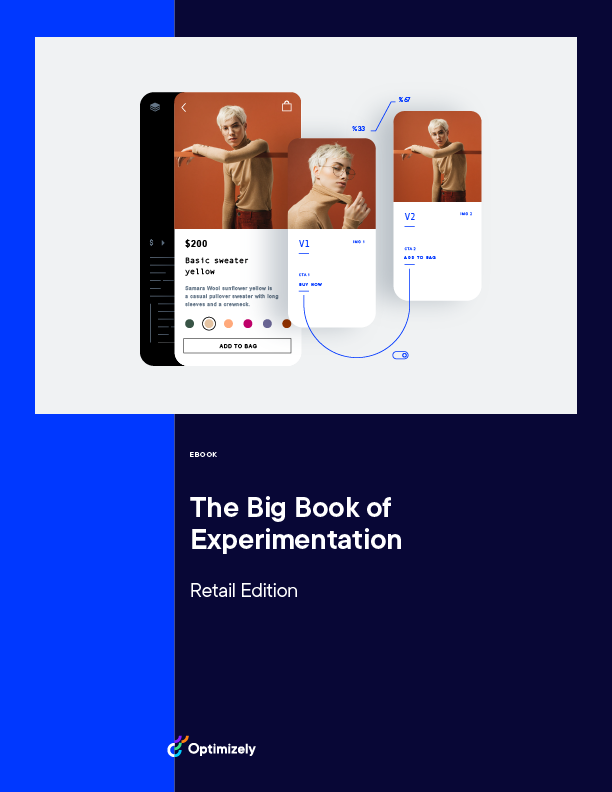
Bildquelle: Optimizely (Version 1)

Bildquelle: Optimizely (Version 2)
Ergebnis
Die abstrakte Version gewann letztendlich doch.
Fazit
Die kleine Version des Covers war zu klein, um die wichtigen Informationen – die Illustration und Beide Texte waren unleserlich. Die Zusammenfassung war prägnant und zeigte genau, worauf man sich einließ. Im Design kommt es auf Klarheit an.
Bilder sind nicht immer besser als Links
Jeffrey de Wijs (Digital Marketing Manager, Optimizely): Jeff, derjenige, der Ihnen den Optimizely-Newsletter zusendet, hat letzte Woche getestet, ob die Verwendung von Bildern anstelle von Stichpunkten die Klicks in unserem Newsletter erhöht.
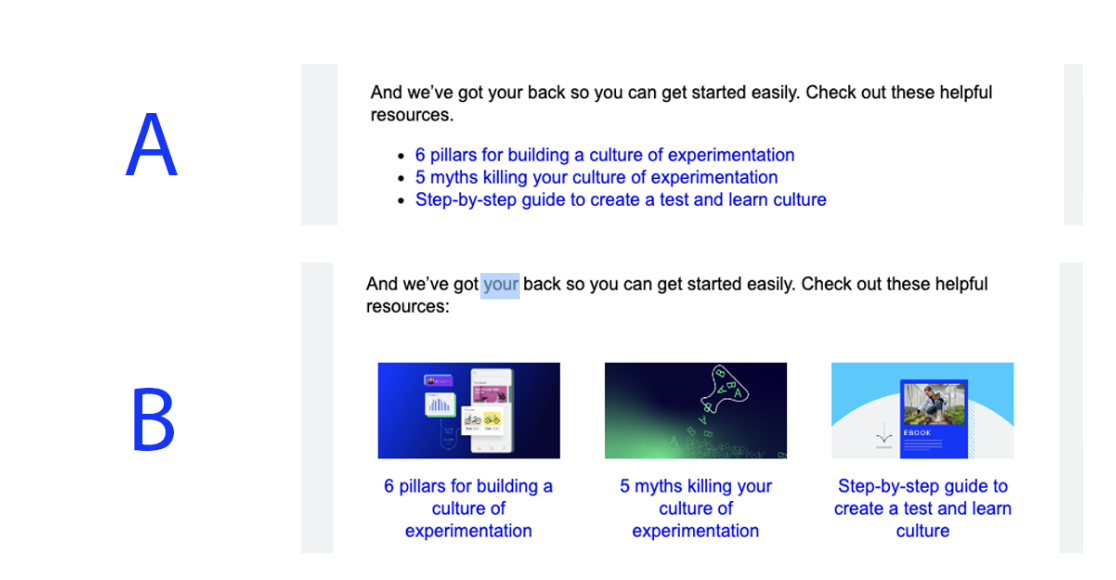
Bildquelle: Optimizely
Ergebnis
Bilder und Links schnitten nicht besser ab als Links allein.
Fazit
Die meisten Den Teammitgliedern gefiel die Bildvariante besser, aber es gab dennoch keinen wirklichen Unterschied bei den Klicks. Vertrauen Sie also nicht auf Annahmen. Testen Sie es selbst.
Kundenperspektive: Die nächste beste Aktion vorhersagen
Virgin Media (Optimizely Customer): Charlotte Golding und ihr Team bei Virgin Media wollten die Next Best Action (NBA) vorhersagen, um personalisierte Kundenerlebnisse zu gestalten. Sie gingen davon aus, dass Kunden nur spezifische Anfragen hätten, wie z. B. die Verbesserung des Netzes in ihrer Gegend oder die Aktualisierung ihres bestehenden Breitbandanschlusses usw.
Ergebnis
Das Team stellte fest, dass ein und derselbe Kunde jeden Tag mit unterschiedlichen Anfragen kam. An einem Tag suchte er den Kundenservice, am nächsten Tag wollte er lediglich ein Upgrade durchführen. Dies wurde in der NBA zunächst nicht berücksichtigt, doch nach dem Experiment musste das Team sein Modell optimieren, um besser zu verstehen, welche nächste Aktion für einen Kunden am besten geeignet ist.
Fazit
Kunden besuchen Ihre Website möglicherweise jeden Tag aus einem anderen Grund. Bieten Sie ihnen nicht einfach ein einziges personalisiertes Erlebnis an und erwarten Sie die gleichen Ergebnisse. Optimieren Sie das Modell regelmäßig.
Was zeigt Ihnen das über die Neudefinition des Konzepts des Scheiterns in Experimenten?
Zunächst geht es darum, eine risikofreudige Kultur zu fördern. So geht's:
- Geben Sie Zeit und Raum für umfangreiche Tests.
Finden Sie das richtige Verhältnis zwischen Geschwindigkeit und Gründlichkeit, um aussagekräftige Ergebnisse zu erzielen. - Beginnen Sie mit der Führungsebene.
Wenn Führungskräfte Experimente fördern, werden diese Teil der Unternehmenskultur. - Streben Sie sowohl nach ambitionierten Zielen als auch nach schrittweisen Verbesserungen.
Kombinieren Sie schnelle Erfolge mit mutigen Experimenten für maximalen Lernerfolg und maximale Wirkung. - Ermutigen Sie Ihre Teammitglieder, Ideen auszutauschen.
Schaffen Sie ein System zum Sammeln und Bewerten von Ideen aus allen Ebenen des Unternehmens. - Schätzen Sie „produktive Fehler“.
Experiment Collaboration macht Experimente zu einem integralen Bestandteil Ihrer Unternehmenskultur. Durch die Standardisierung von Arbeitsabläufen, den offenen Austausch von Plänen und Ergebnissen sowie die Einbeziehung aller Beteiligten schaffen Sie ein Umfeld, in dem Testen zur Selbstverständlichkeit wird.
Bei einer bekannten Brauerei zeichnet der CTO mit dem F*UP-Award alle gut konzipierten Experimente aus, unabhängig vom Ergebnis. Dieser Ansatz ermutigt das Team zu mutigen Innovationen, zum Ausprobieren neuer Dinge und zum offenen Teilen aller Erkenntnisse – nicht nur der Erfolge. Er macht jeden Test zu einer wertvollen Chance und fördert eine Kultur der kontinuierlichen Verbesserung und bahnbrechender Entdeckungen.