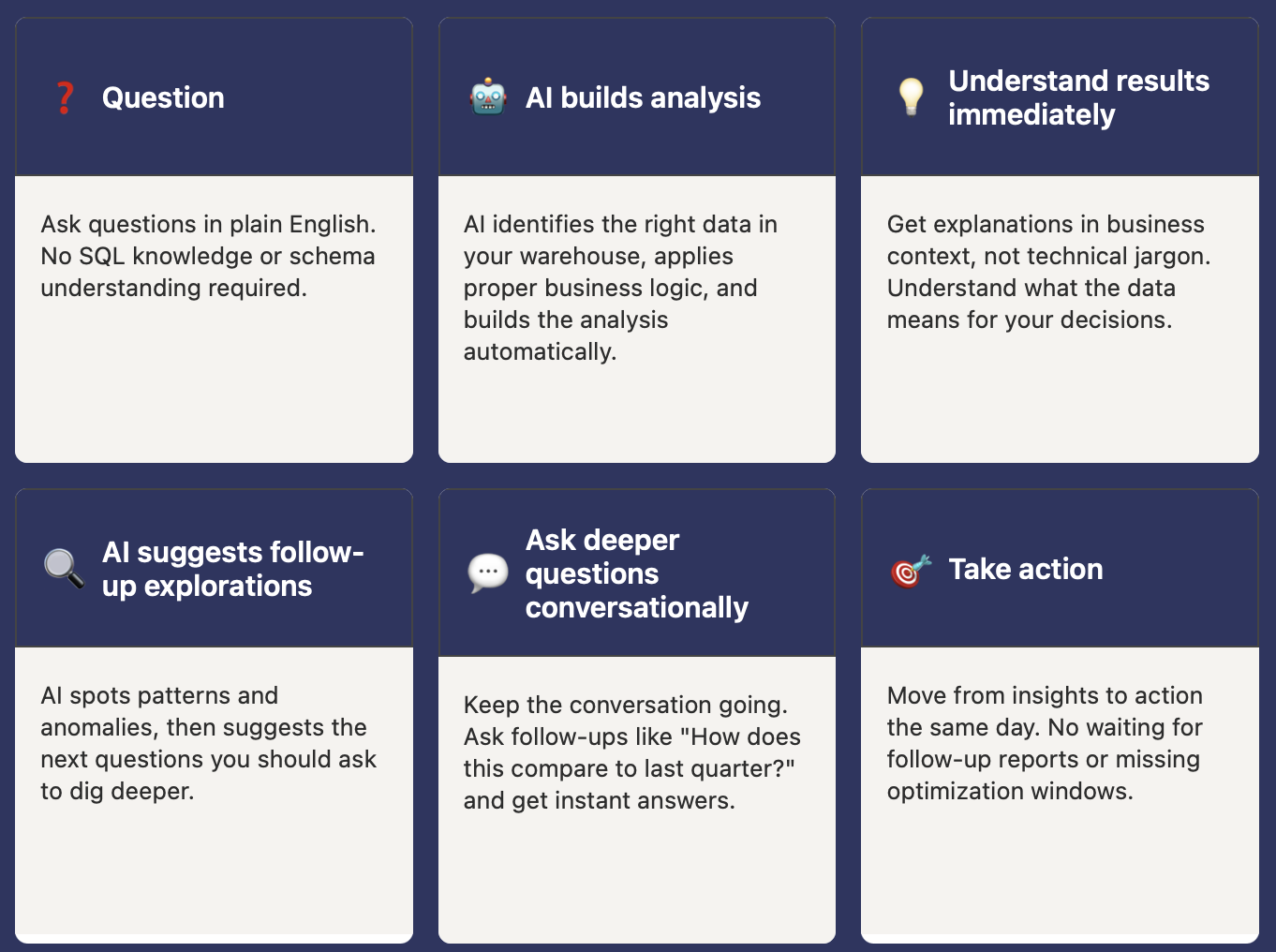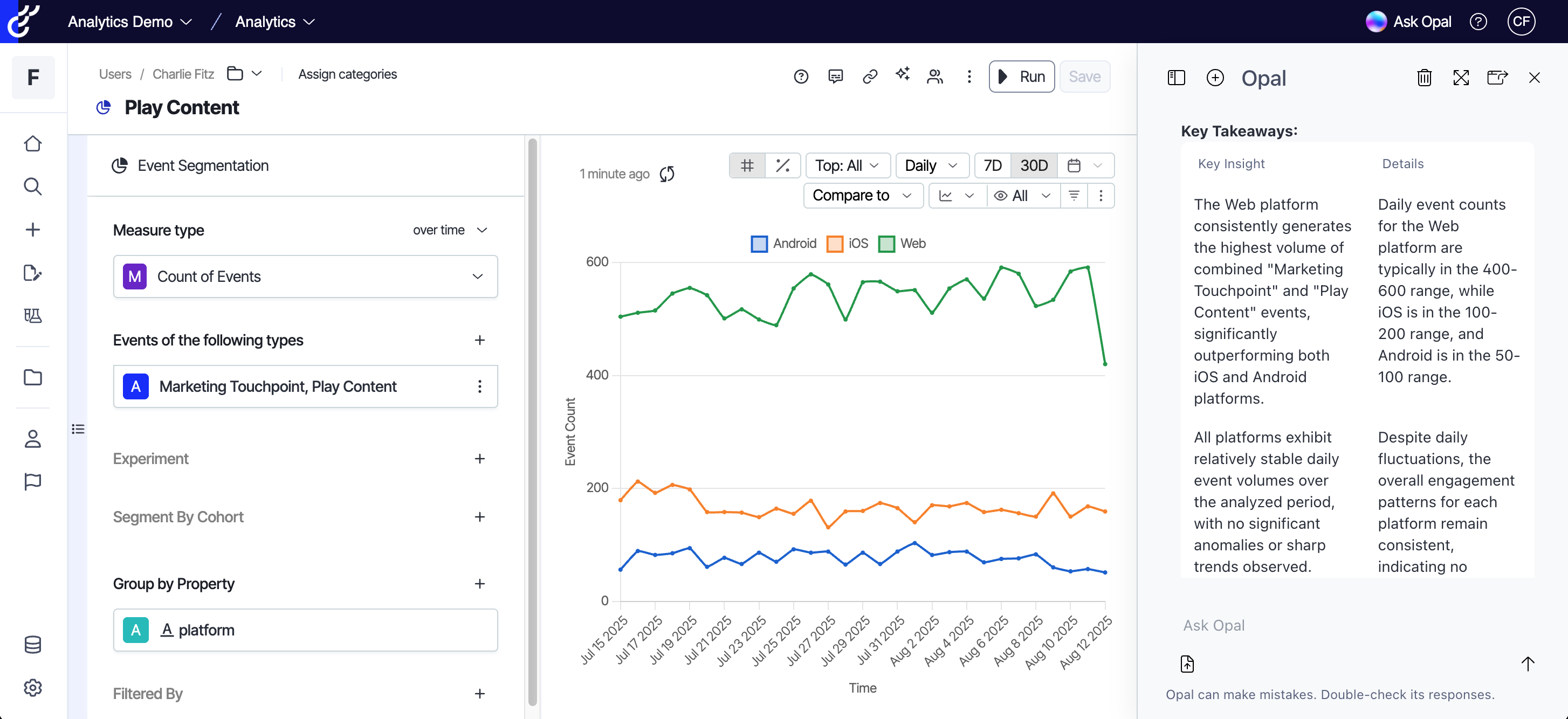
I’ve spent the past year building AI analytics capabilities in Optimizely Analytics, and the same theme comes up with customers and prospects:
We’ve heavily invested in our warehouse and have a great analytics team, yet the product team is still waiting two weeks for a basic retention report, and my analytics team is stuck doing primarily reactive work.
The issue isn’t warehouse access—most people can get read access with a request. The real challenge is that analysis requires SQL or data modeling skills, often along with learning another tool. As a result, people usually can’t get the answers they need without going through an analyst.
Even for analysts who are fluent in SQL, some product analyses take time without the proper tooling. Building a retention analysis with the right time windows, business logic, and cohort definitions in a traditional BI tool can take days.
And when the inevitable questions from the PM comes, “This is great, but can we change the retention chart to measure from the user’s first purchase instead of their signup date?”
Now the analytics team is stuck redoing all the date logic, rebuilding the measures, and fixing every visual that depended on the old definition.
That’s the two-layer problem I see over and over:
-
Product and marketing users can’t easily or quickly pull answers from the warehouse.
-
Analysts get buried in complex (and not complex), one-off requests that spawn endless follow-ups.
That’s why we’re building AI-powered analytics to augment human capabilities, unblock business teams, and free up analytics experts to focus on the highest-leverage work.
The analytics bottleneck that's killing your warehouse ROI
Data teams everywhere are facing the same impossible equation.
Massive warehouse investments + skilled analysts + eager business users = still waiting weeks for insights.
The infrastructure success story is real:
-
91% of enterprises have invested in cloud data warehouses (Gartner, 2024)
-
The data warehousing market size was valued at USD 34.9 billion in 2024 and is expected to reach USD 126.8 billion by 2037 (Research Nester, 2025)
But the business adoption reality tells a different story:
- Only 32% of organizations achieve true self-service analytics (Gartner, 2024). Even fewer manage it directly on their warehouse data.
- Business users still wait 7-10 days for new reports (ThoughtSpot Research, 2024)
- Data analysts spend 70% of their time building reports versus strategic analysis (McKinsey, 2024). They're stuck in reactive mode instead of proactively identifying opportunities.
- Product managers make roadmap decisions without data backing because insights arrive too late
It's an access problem that leads to teams spending most of their time building dashboards.
When analysts become human dashboard generators
Here's the workflow that's burning out your user experience analytics team and frustrating your business users.