Making personalization feel handcrafted with the Agent Platform at Corinthia Hotels

100%

First-time approval rate

10x

Faster variant performance

150+

Hours saved in planning

Corinthia Hotels built its name on attentiveness, and the challenge was carrying that same feeling into every digital touchpoint, across five guest personas and a 14-stage journey. Working with MSQ DX, Corinthia built a team of AI agents, using the Optimizely Agent Platform, that produces on-brand content for every persona and stage, shipping its latest cycles 10 times faster.

  • Corinthia built a seven-agent AI system to personalize content across five guest personas and fourteen lifecycle stages, with no guest data ever entering the AI.
  • Its most recent production cycle hit a 100% first-time approval rate, zero brand violations, and zero hallucinations.
  • Variant production now runs ten times faster, freeing the team from manual content work to focus on the guest.
Industry
Travel
Products used
Content Management SystemOpal

Attentiveness that had to scale

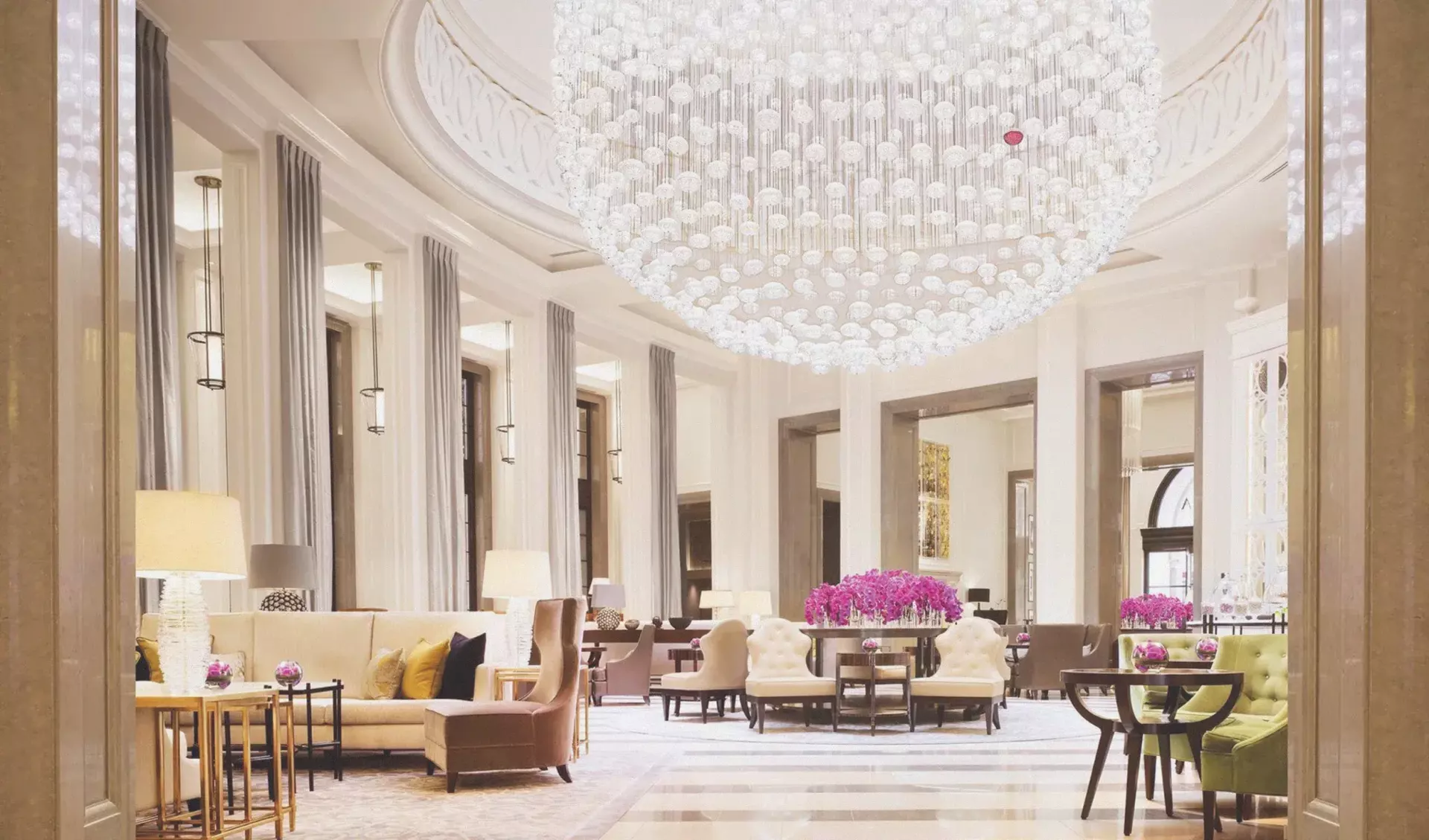
Founded in Malta in 1968, Corinthia Hotels pioneered the "grand boutique" concept: the grandeur of a luxury hotel with the character and intimacy of a boutique one. Its portfolio now runs from the original Corinthia Palace in Malta to London, New York, Brussels, Bucharest, Lisbon, Budapest and Rome.

The brand is built on anticipating what a guest wants. Doing that digitally was the harder problem. Five guest personas across a fourteen-stage lifecycle made real personalization impossible to sustain by hand. And Corinthia's audience notices everything, quick to spot and dismiss luxury language that feels off the shelf. The brand's standards are exacting by design, and the team had no intention of relaxing them to hit a volume target.

What Corinthia needed didn't exist yet. Not a chatbot, not a copy generator, but something that could plan content strategically, write it on brand for any persona and stage, and catch its own mistakes before a human saw them, all at the scale the business ran at.

Deciding to build

Corinthia had long recognised the gap. On property, it already treated guests differently from the moment they arrived, a spa guest's first point of contact was the spa itself, not the front desk, but the website treated everyone the same, built to capture wedding parties, spa visitors and plain room bookings alike with one generic experience. Closing that gap, so a guest felt the hotel already knew what they were looking for, beyond the room booking itself, became the business case for the project. For Emily Jewell, Senior Head of Global Marketing, that gap came down to something more fundamental than data.

"This was never about locking a guest into one profile. It's about letting people be human. The same guest might want something completely different depending on their mood that night, or which of our hotels they're staying in. So the technology has to stay reactive to that, rather than us deciding once and sticking with it."

Emily Jewell|Senior Head of Global Marketing, Corinthia Hotels

Two things had to be true before that was possible. First, the data: different hotels and restaurants across the group had long run on different booking engines, with nothing feeding a single view of the guest. Corinthia spent roughly two years unifying its marketing and operations systems before personalization at this depth was even on the table.

Second, the content design and delivery mechanisms had to understand the customers’ mental model of the data Corinthia held.

"Responding to a guest's specific needs at each moment of interaction without becoming invasive is the hard part with hyper-personalization," says John Prior, Consulting Partner at MSQ DX. "You should never simply show what you know without knowing why you're using it and what the guest's expectation will be. Personalization succeeds where it feels natural and useful to the guest for you to anticipate what they need, based on their relationship with your brand."

Seven agents, one standard

The system works like a small, tireless content team. Seven AI agents each own a piece of the workflow, from setting content strategy through to writing variants and, most importantly, checking quality.

That last part is the difference. A dedicated quality-control agent reads everything the others produce and catches brand and grammar slips, down to style conventions as specific as Oxford comma preferences, before anything ships, so consistency is enforced by the system itself, not by a person reviewing every line. In a single run, the agents turn out a full set of persona and lifecycle variants, work that was never realistic to do by hand at this scale.

"AI processes are unpredictable by design, so it isn’t enough to rely on one-shot prompting to deliver reliable outcomes," John adds. "Multi-stage safeguards need to be built into the workflow, using adversarial agents to check each other’s work, with clear data boundaries at system integration points. The right system means that human intervention becomes an exception rather than a blocker."

"We started with the brand book, but then once the agents were built, we worked directly with their content team to uncover the unspoken rules behind the spirit of the brand and refine them into structures the agents could reliably apply ."

John Prior|Consulting Partner, MSQ DX

None of this is guesswork. The system maps 76 distinct behavioral signals across 6,384 points to shape which variants get built and how they line up with each stage of the journey. That granularity is what lets Corinthia personalize around real guest behavior rather than a handful of broad segments.

Ten times the output, none of the compromise

That combination, seven specialist agents plus a human approval gate, is what turned the numbers above into more than a projection. The most recent cycle came back with a 100% first-time approval rate and zero brand violations, results that carry more weight in luxury than almost anywhere else, because the audience is unforgiving. Across every output, zero hallucinations. Variant production ran ten times faster than the old manual process, and planning alone saved more than 150 person-hours, time the team now spends on guests rather than proofing copy.

"We wanted to show our guests the same attentiveness digitally that we deliver in person. It would have been impossible to scale the program to this level without AI."

Emily Jewell, Senior Head of Global Marketing

The project has been recognised twice by the industry: Innovative Use of AI in Marketing at the Hotel Marketing Association Awards 2026, and a Gold Standard win in the Artificial Intelligence in Travel Marketing category at The Travel Marketing Awards 2026.

Built to travel

What Corinthia has now isn't a one-off. It's a replicable foundation, handed over with a framework that lets the team run and scale the system themselves, ready to roll out across any property in the portfolio.

Because Corinthia owns the system rather than renting it, every new property is a rollout, not a rebuild. The team can extend the same agents, the same standards, and the same guardrails to the next hotel on its own timeline, without waiting on outside help to make a change. The promise the brand was founded on, anticipating what a guest wants before they ask, now scales across every market it operates in, without losing the personal touch that made it worth protecting.

Let's get you an agent