Data-driven decision-making can directly impact your performance metrics.
For example, Netflix analyzes viewing habits, search history, and user ratings to power recommendations, guide content creation, and optimize service delivery.
By leveraging this data-driven approach, Netflix not only recommends content but also predicts successful show concepts. Further, they can predict customer churn and take proactive measures to retain at-risk subscribers.

Image source: AIM Research
Netflix's success demonstrates how data can drive improvements across multiple performance metrics. Here are five key areas where you can use data to significantly enhance business performance:
Conversion rates: By analyzing user preferences, you can personalize website messaging, potentially leading to more users buying what you're selling. For example, by testing a new website design, ClassPass saw a 10% increase in the sign-up rate.
User engagement: Data can reveal which features or content users interact with most, allowing you to create more engaging experiences. Brooks tested the following message and got more orders with 88% saying they appreciated the customer service offer to help.
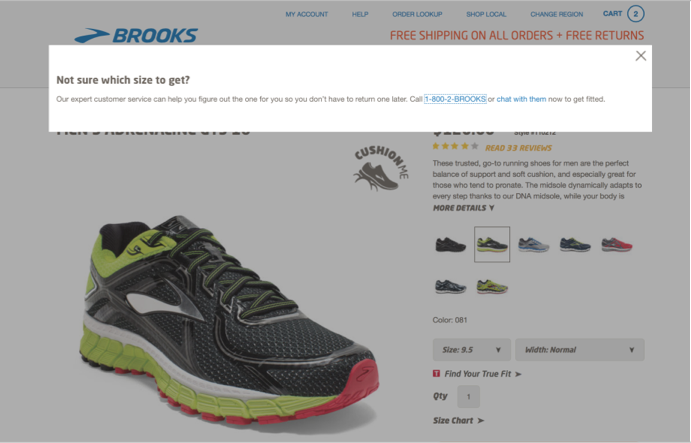
Image source: Brooks Running
Customer Lifetime Value (CLV): By identifying at-risk customers, your key performance indicators (KPIs) can focus on creating personalized experiences and improving retention rates.
Product development: User feedback can inform product improvements and new feature development, ensuring you build products as per customer needs. See how DocuSign accelerated experimentation velocity by simplifying the data-driven decision-making process.
Checkout rate: You can look at analytics data and identify dropoff points or compare your checkout flow to competing sites to understand why shoppers are abandoning a cart. This is how Hunter Engineering used machine learning to increase monthly orders by 20%.