Sending 1% percentage of users to new experience using Feature Flag. Image: Optimizely
How to do canary testing
Canary testing allows new code or features to be released to a small subset of users to verify if there are any issues with the code before releasing to a larger audience. By limiting the release to a select audience to minimize the blast radius of new releases, teams are able to validate functionality and performance prior to rolling out to all users.
Another reason to do canary tests and product experimentation is that often times development or staging environments do not fully match production environments and by testing with a small percentage of production users (often referred to as testing in production), you can detect issues that may not have been found in staging or development environments.
Canary testing & feature flags
Canary testing can be done by using feature flags which enable teams to separate code release from feature enablement and turn features on and off remotely for specific groups, percentages of users, or all users. Using feature flags, teams can limit the release to just 1% of users, monitor key metrics like error rates, latency, and business metrics to ensure the new feature has no negative effect.
If the canary test discovers an issue during the deployment process, it’s easy to disable that new feature or code by turning that feature flag off. Canary releases can help prevent major downtimes, lost revenue, or negative customer sentiment by providing fast learnings about the performance of a new feature while limiting those affected.
Canary testing & continuous delivery
Championed by influential software developer Martin Fowler, continuous delivery is a software development discipline in which software can be released to production at any time. It has been adopted by leading software companies around the world whose teams are now expected to quickly deliver software that is stable and bug-free to your user base.
Canary testing fits into the continuous delivery and continuous integration methodologies. Best in breed continuous delivery systems like a companies like Facebook integrate deep monitoring and automated testing into their canary testing. If a feature fails a monitoring check once it’s been deployed as a canary to a percentage of users, it will automatically roll back. With continuous deployment and canary tests, a team can more safely release new functionality and code changes at scale.
Canary testing in Intelligence Cloud
Software engineering teams can now use Optimizely free feature flags to implement feature flags for canary testing.
Teams can embrace the practices of continuous integration and continuous delivery employed by today’s advanced engineering teams. Both teams – and entire companies – will be able to benefit from the faster development cycles, and feature management practices like canary testing to mitigate risk.
Optimizely server-side experimentation customers can follow in the footsteps of the world’s top software companies (like Amazon, Google and Facebook) that validate their features to just a small percentage of users before rolling out more broadly.
Optimizely also offers enterprise-grade and feature management through Optimizely server-side experimentation, a powerful solution for doing canary testing, controlled feature releases, and feature tests in your product or app.
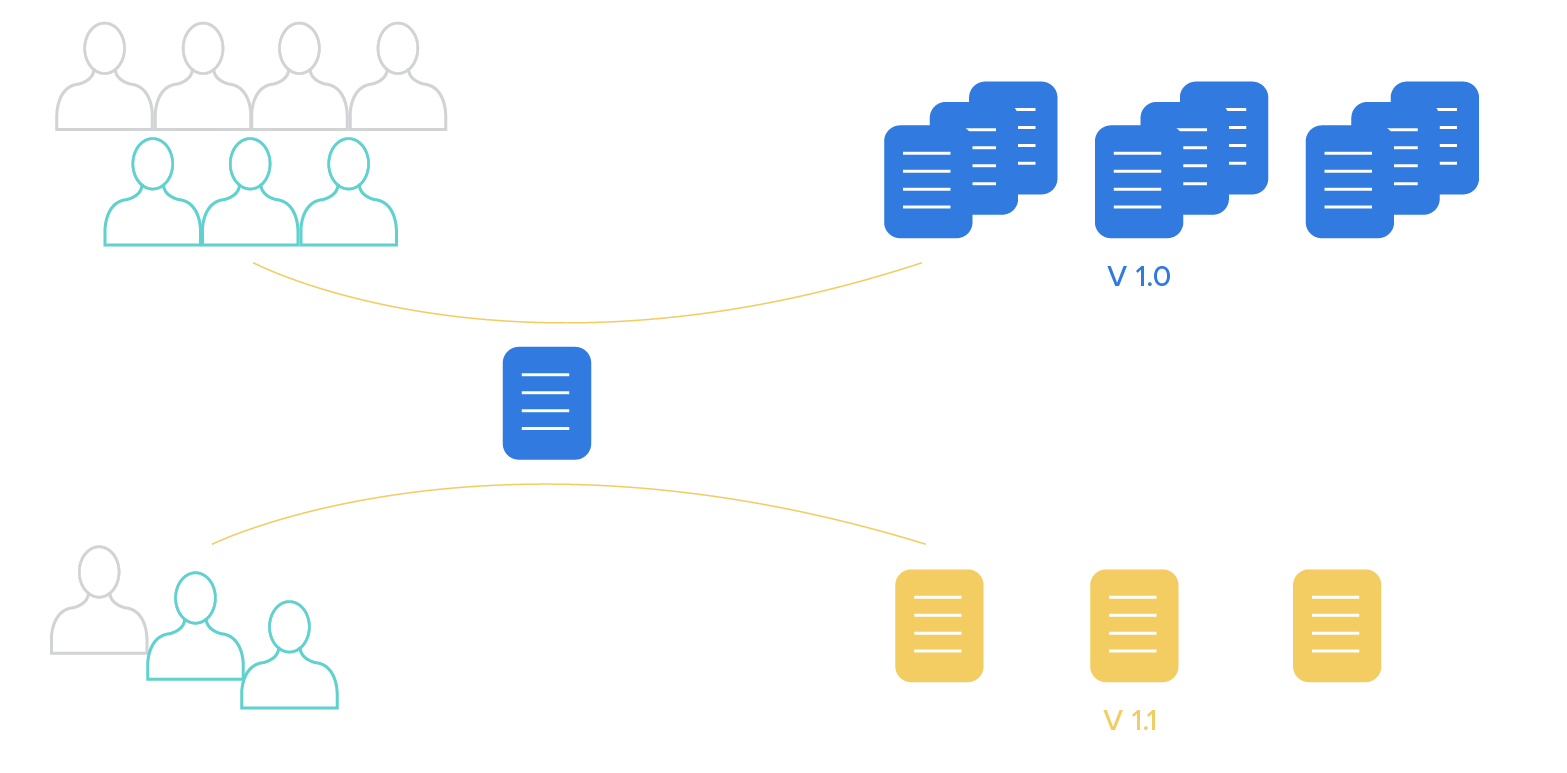 Splitting traffic by application version.
 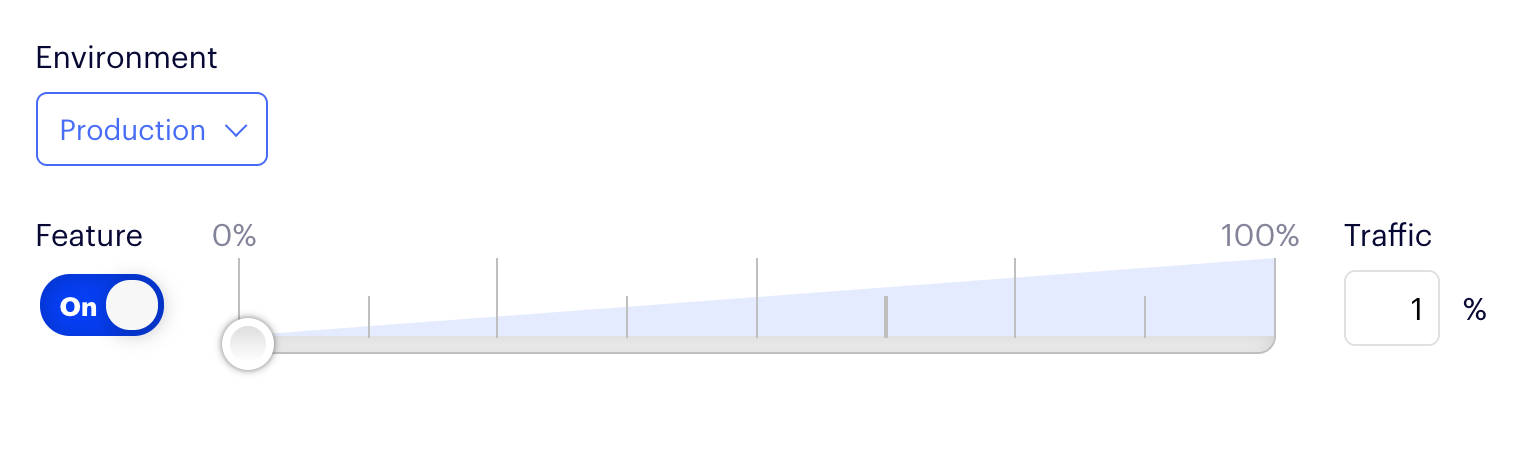 Sending 1% percentage of users to new experience using Feature Flag. Image: Optimizely