With the advent of generative AI, personalization is now more accessible than before. Experts expect genAI to make it easier to overcome past obstacles to building personalized campaigns through the power of automation and even offer deeper personalization for companies who commit to data quality.
How does website personalization work?
Companies engaging in delivering personalized experiences to their customers will adopt personalization tools and personalization software to optimize the user journey.
These personalization tools will combine collected data through a customer data platform (CDP) along with AI and machine learning to assess customer behavior in real-time.
Some of the user data that is most valuable to providing a personalized experience include:
- Browsing history
- Geolocation
- Demographics
- Past purchases
- First-party data
Personalization software will then analyze this data and create a tailored website experience that leverages dynamic content in order to meet the specific needs of the customer. This can be done with either rule-based personalization (where a personalized website experience is mapped out prior to delivery), or with AI that leverages algorithms to create new touch points and predict user behavior.
This tailored website experience can include:
- Surfacing relevant website content like case studies and targeted web pages that were designed specifically for the customer’s affinities
- Reshaping the web experience so that site visitors are hit with specific calls to action and more user friendly functionality
- Delivering product recommendations based on previous customer behavior and the experiences of similar user profiles
Personalized marketing also extends beyond just the web experience. Email marketing campaigns, landing pages, and social media can also be personalized based on the actions taken by the user either on site or through data that was collected.
What are the benefits of website personalization?
What other type of marketing strategy could drive a 10-15% revenue lift for your business all on its own? The answer, according to McKinsey, is website personalization.
Consumer expectations have shifted to the point that people expect a personal digital experience that mirrors the typical level of personalization they receive offline. That’s why 83% of consumers are also willing to share their data so that marketers and web developers can deliver them a tailored experience.
The list of statistics highlighting the benefits of website personalization for marketers is long, but it all comes down to this: web personalization drives revenue and improves metrics. How?
- Drive conversion rates: Data from Google found that 63% of smartphone users were more likely to buy from mobile or app ecommerce experience when the experience delivered relevant product recommendations.
- Build loyalty: The Twilio State of Personalization survey found that 62% of businesses reported an increase in customer loyalty after investing in personalized experiences.
- Increase average order value (AOV): Recommending products, reducing the barriers to conversion, and using customer data to specifically enhance the customer experience means more than conversion: it can increase your AOV by 10%.
- Decrease bounce rate: Users are much less likely to exit your site after one interaction if they are being greeted with relevant content.
Ultimately, investing in web personalization is investing in staying in the race: according to Twilio 75% of business leaders now say personalization is “tablestakes”. But the race for personalization or even hyperpersonalization hasn’t been won yet. Because even though marketers and executives are obsessed, customers are less than impressed.
On top of that, only 9% of executives in a recent survey noted that they have reached full implementation of their personalization efforts.
Data from all the key research, including Google, McKinsey, and Twilio reports that customers want personalization, and they’re willing to give you their data as long as you’re responsible for it. Yet, consumers report not seeing much improvement.
Website personalization examples
With the right website personalization strategy, delivering relevant content to the right audience segment via the most engaging experience—oh, and at the right time—is easier than ever.
This can materialize in many, many different ways and can be segmented by location, position in the customer journey, persona, past behavior, and more.
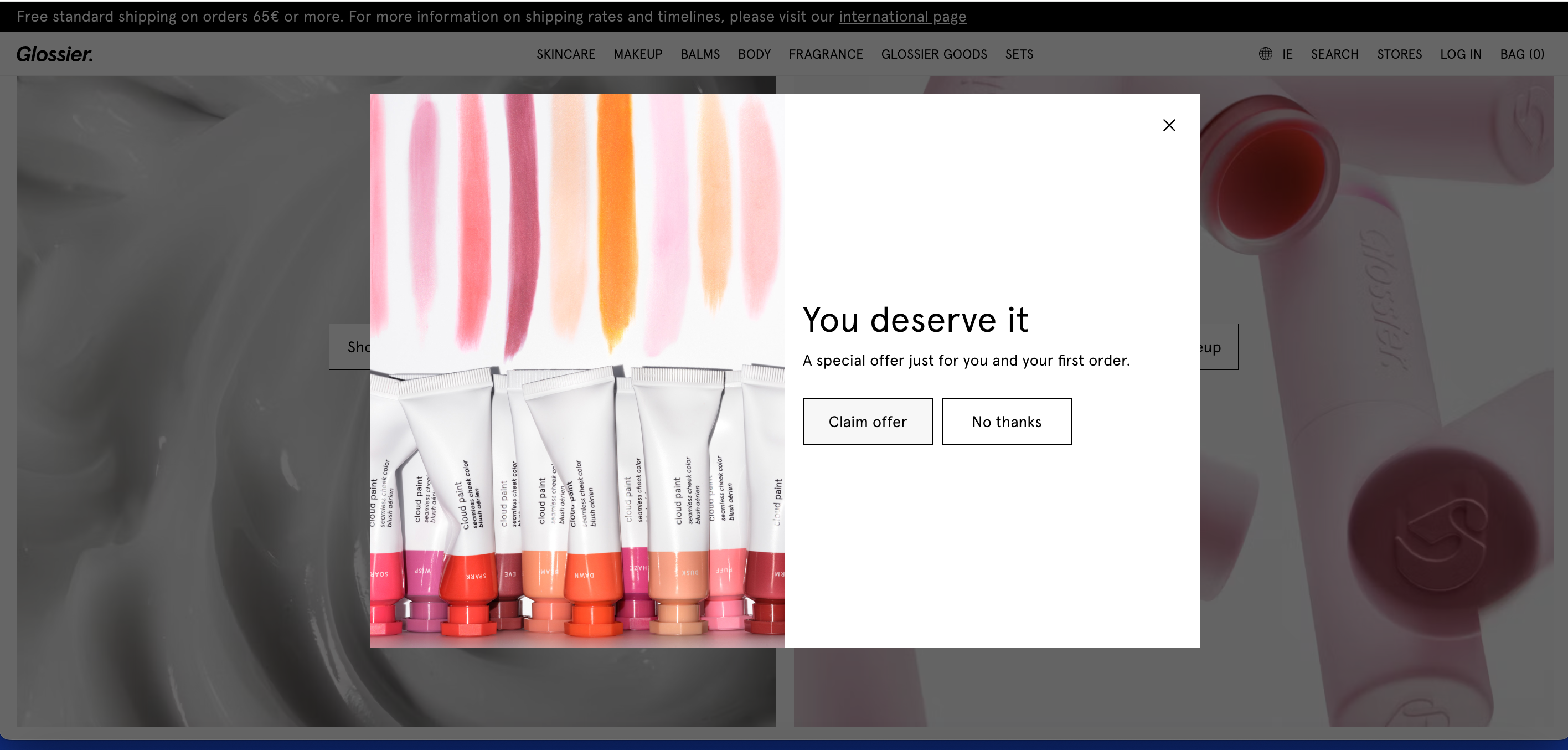
Let’s take an example: You’re a digital marketer for an e-commerce store in Chicago selling healthy snacks. You can personalize your homepage by displaying a pop-up to first-time website visitors from the U.S. offering them a discount.