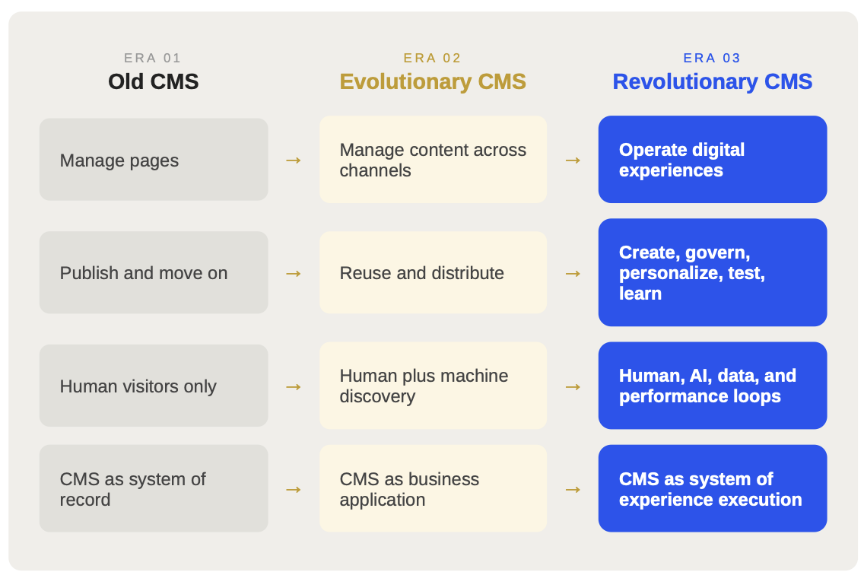
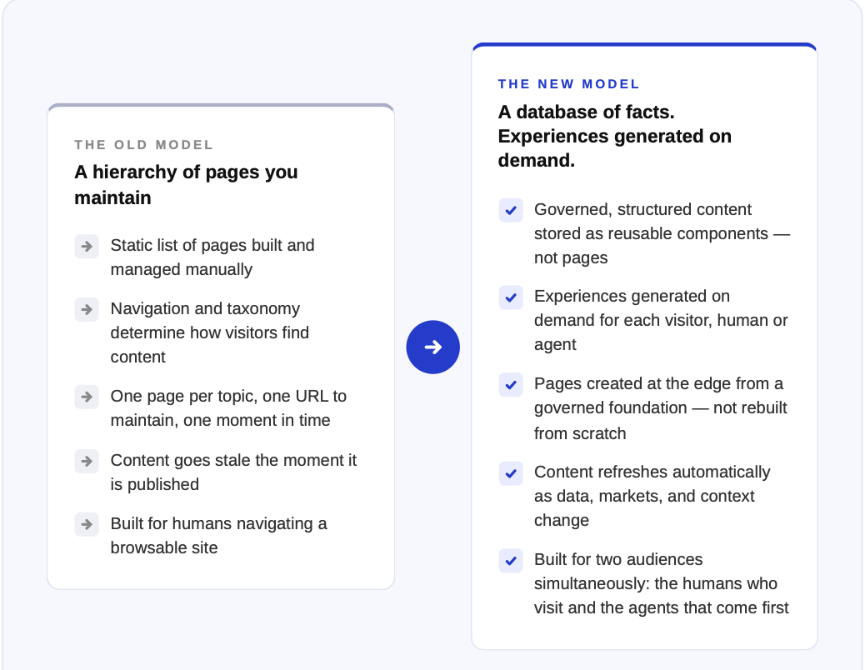
The gap between the old model and the new one is not a product roadmap problem. It was determined by architectural decisions vendors made years ago, and none of those gaps can be retrofitted with a product release.
When teams feel CMS pain acutely, the instinct is often to reach for faster relief in the form of more headcount, specialist agencies, pure headless builds, page builders, point AI tools, or custom-coded solutions. Each can address specific symptoms. None addresses the operating model.
The shortcuts and their tradeoffs
More resources
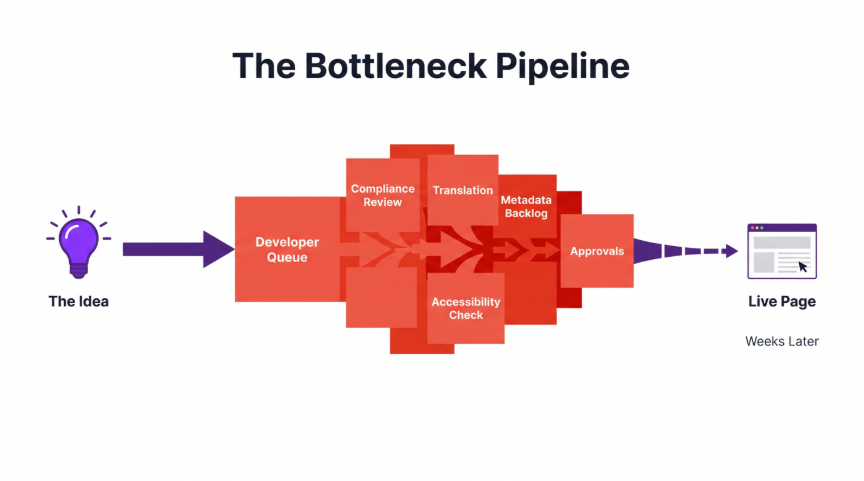
Additional resources help teams produce more, but they also add handoffs, approvals, coordination overhead, and governance. Scaling a broken workflow with more people just scales the friction alongside the output.
Pure headless
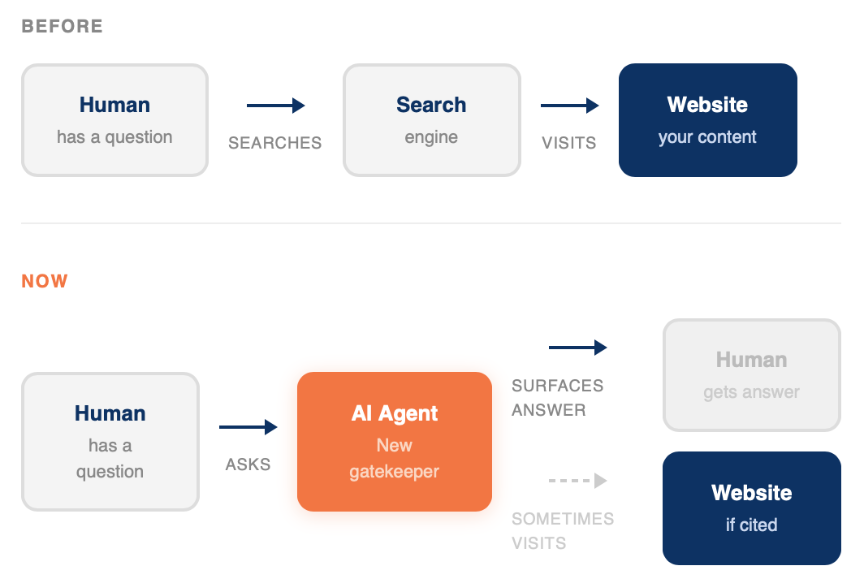
Pure headless systems solved a real developer problem by separating content from delivery, making content easier to distribute across channels. But in an agentic world, that separation creates a tradeoff. The CMS can store and distribute content, but it often sits too far from the signals that make experiences better, including audience behavior, conversion data, experimentation results, personalization context, and AI crawl activity. Without those signals, the CMS becomes a content repository rather than a system that can learn from outcomes.
Bolt-on AI
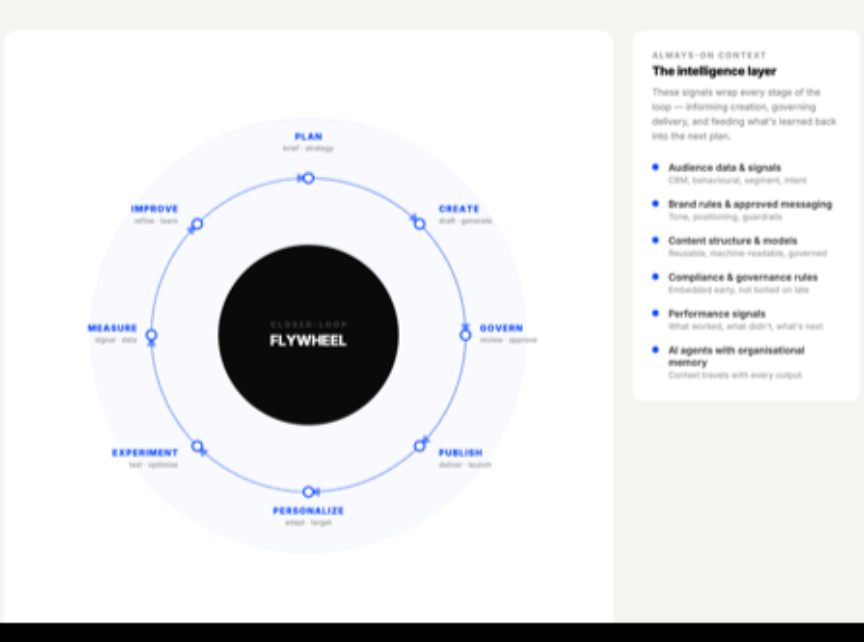
Bolted-on AI features can accelerate individual tasks such as drafting a headline, summarizing a page, creating a variation, or generating metadata. Those are useful improvements, but they do not solve the operating model. If AI creates more parts without connecting those parts to planning, governance, publishing, personalization, experimentation, and measurement, the result is just a larger pile of disconnected assets. The team moves faster for a moment, then slows down again when someone has to assemble, approve, adapt, track, and improve the work manually.
Custom builds
AI-assisted custom builds (often referred to as “vibe coding“) have genuine utility for prototypes, landing pages, and fast experimentation. But enterprise content operations are not a one-off build. They require permissions, governance, localization, accessibility, compliance, analytics, integrations, ownership, and change management over time. You can vibe code a billboard. You cannot sustainably vibe code the operating infrastructure for a global digital business.