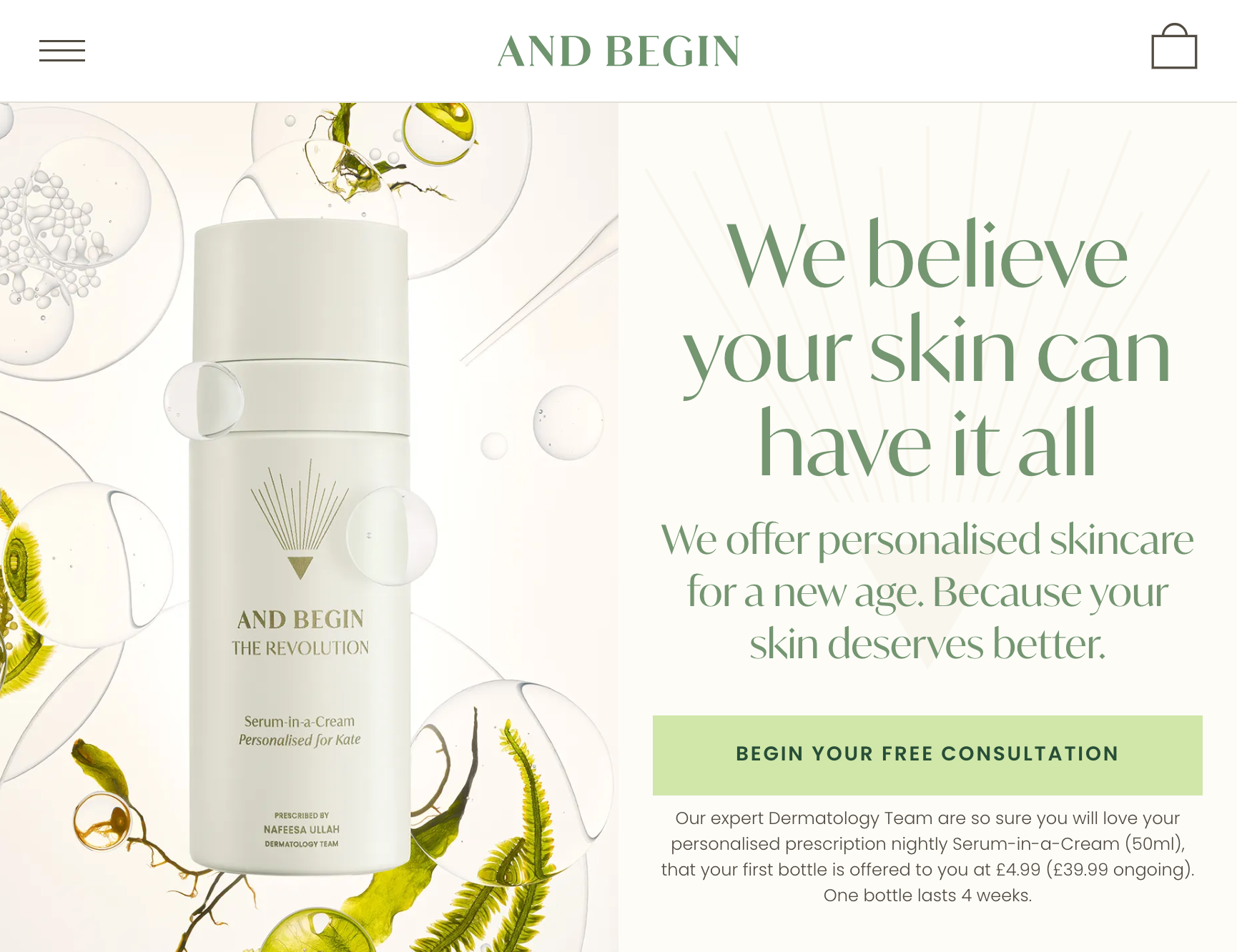
7 landing page optimization best practices to use on every page
Landing page optimization identifies potential problems with the landing page design, content, or functionality so you can eliminate them quickly.
Follow these landing page best practices and try out these potential test ideas:
1. Limit the number of actions on the landing page
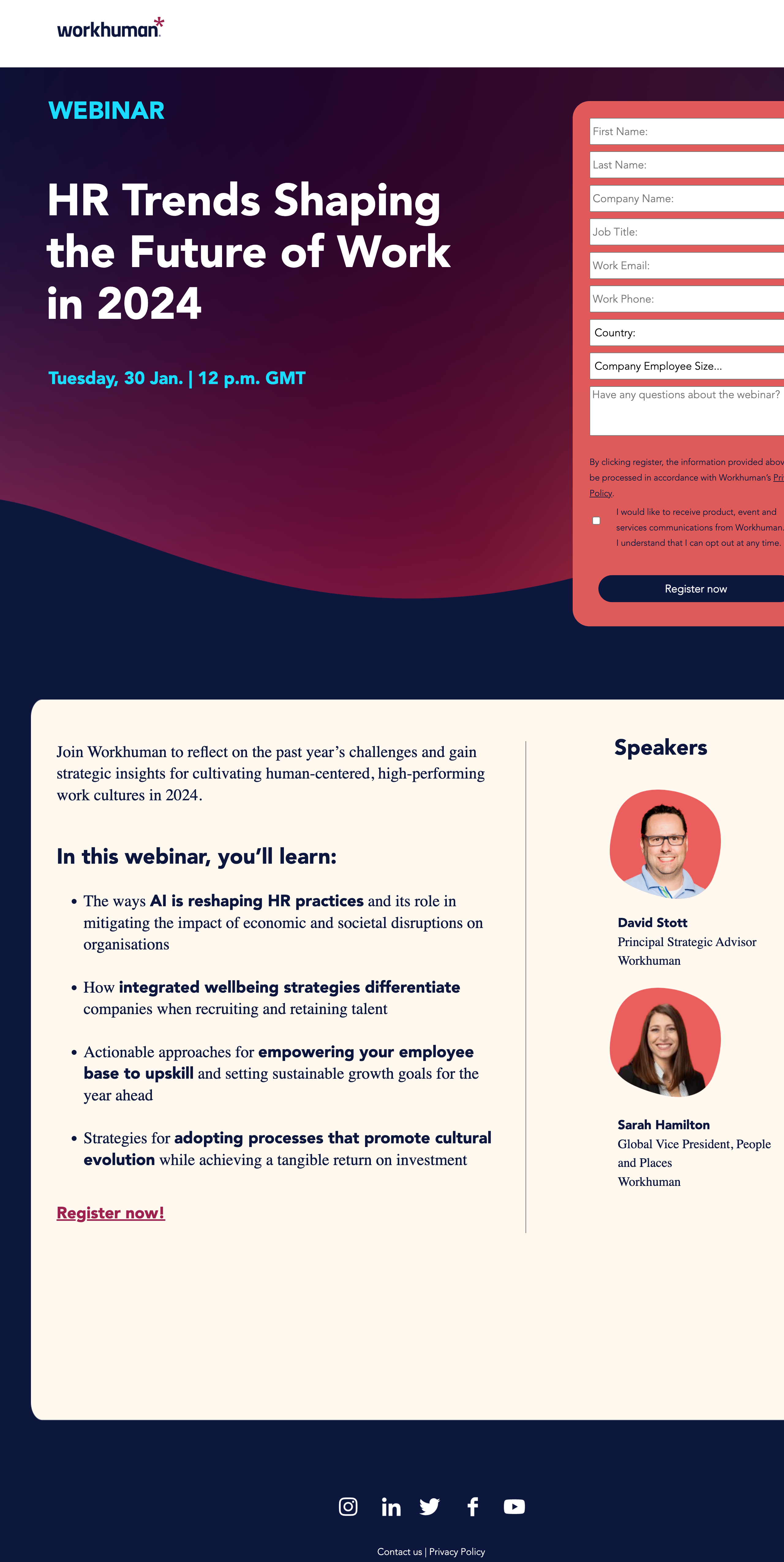
Test removing website navigation elements, minimizing form fields, or leaving out other unnecessary functionality. You’d be surprised how much a simple design with a clear call to action and plenty of white space can lead to more conversions.
After all, minimizing the distractions on your page could boost conversions by 10%.
2. Minimize page load time
Page load speed begins to play an important role in user experience. The faster you can make your page load, the more likely you’ll at least get the visitors to your page. And a landing page with a 0-2 second load time will have the highest conversion rate.
Much of the work to be done here falls under the realm of technical SEO and can be identified by SEO tools like Moz but will be completed by a web developer. Typically, you'll look at reducing redirects, improving server response time, using caching to your advantage, and publishing via a content distribution network (CDN).
For marketers and UX teams, it's important to make sure you're optimizing your images for the web, i.e., choosing the right file format and size for each image.
3. Clearly articulate your value proposition — and do it quickly
Test headline variations and call-to-action text that more closely matches the language your visitors use to describe what they’re looking for.
Additionally, be sure that your final landing page copy is tied to your traffic source: mismatched ad and landing page copy will confuse users and tank your conversion rate.
4. Match the expectations and needs of the visitor based on their previous interaction (context)
Test using keywords from ads in your landing page copy. For example, say you run a sock ecommerce business and you are running paid search ads on Google Adwords and promoting pins on Pinterest.
If you’re bidding on the keyword [warm socks], then you will want to design a landing page experience that is congruent with the searcher’s intent--specifically describing what temperatures your socks are suitable for and how the wearer might feel in different locations.
On the other hand, a potential customer from Pinterest or another social media platform might be more interested in how they will look in the sock. A high-converting landing page experience for that traffic source could involve a stylish hero image or an augmented reality shopping experience.
5. Social proof offers a small boost
Test adding other customer logos, partner logos, a customer case study, testimonials, or other forms of social proof to the landing page, but don’t expect it to make or break your conversion optimization work.
LPO tool Unbounce says that there’s only a 1% difference in conversion between pages that add social proof and those that leave it behind. However, 1% is still something, and you’d rather have 1% of 100,000 visitors than leave them by the wayside.
Even if you don’t have any of the above, a phone number or Verisign badge for potential customers will help build trust with brand-new customers from their very first interaction.
6. Boost lead generation by offering something of value
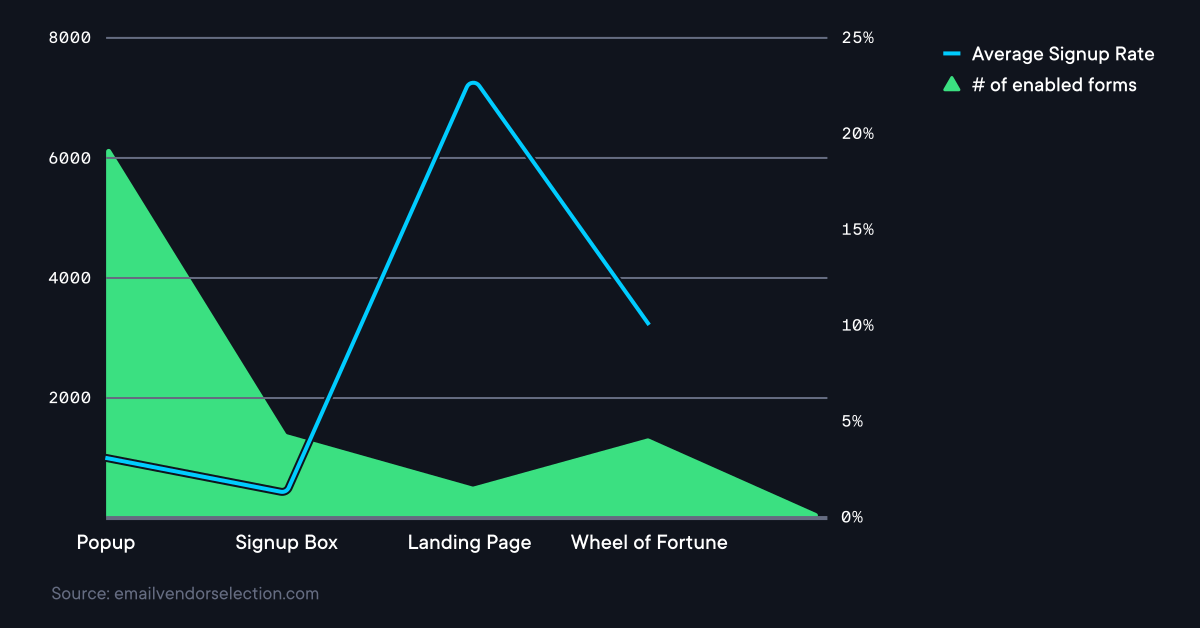
Landing pages are the tool of choice for lead generation, but you’ll want more than a web page, even a well-optimized one. Customers expect something in exchange for handing over their information. A lead magnet When the primary CTA is a landing page form that only asks for an email address, potential customers can be more ready to give that up in exchange for some value.
7. Optimize for search engines
Landing pages that are designed for search engine optimization (SEO) often look and feel much different than pages designed for paid media. Search engines are more picky about sending organic search traffic to pages that they don’t believe actually provide value for their users. That’s why gated content rarely ranks on Google.
You would want to expose your content to search engines via a resource or blog section and capture leads with exit intent software or other offers.
Manage conversion optimization with landing page optimization tools
Landing page optimization will take you closer to your conversion goals. But you can’t optimize alone: you need data.
To effectively optimize your landing page, landing page optimization tools provide you with the data you need to understand your pages’ performance. When taken together, these tools can tell you:
- Who visits your page and the breakdown of new vs. returning users
- Where your website visitors spend their time via scroll maps and heat maps
- How much time visitors spend on a page and where they arrive from
- What copy, design, and image variations are performing best
Most LPO tools offer these features, but Optimizely Web Experimentation goes further because it offers more experimentation features that allow for evidence-based optimization. Plus, Optimizely Web Experimentation is integrated with the other data sources you need to put your experiments into context, including Google Analytics, Hotjar, and more.
Optimizely Web Experimentation has a drag-and-drop landing page builder that allows you to run multiple experiments on the same page, randomize users or build for specific groups, and Ultimately understand when you have a statistically significant difference in the rate at which landing page variations are converting visitors.
Landing pages are a high-impact place to focus your optimization efforts — and they’re a great way to kick off your experimentation program.